

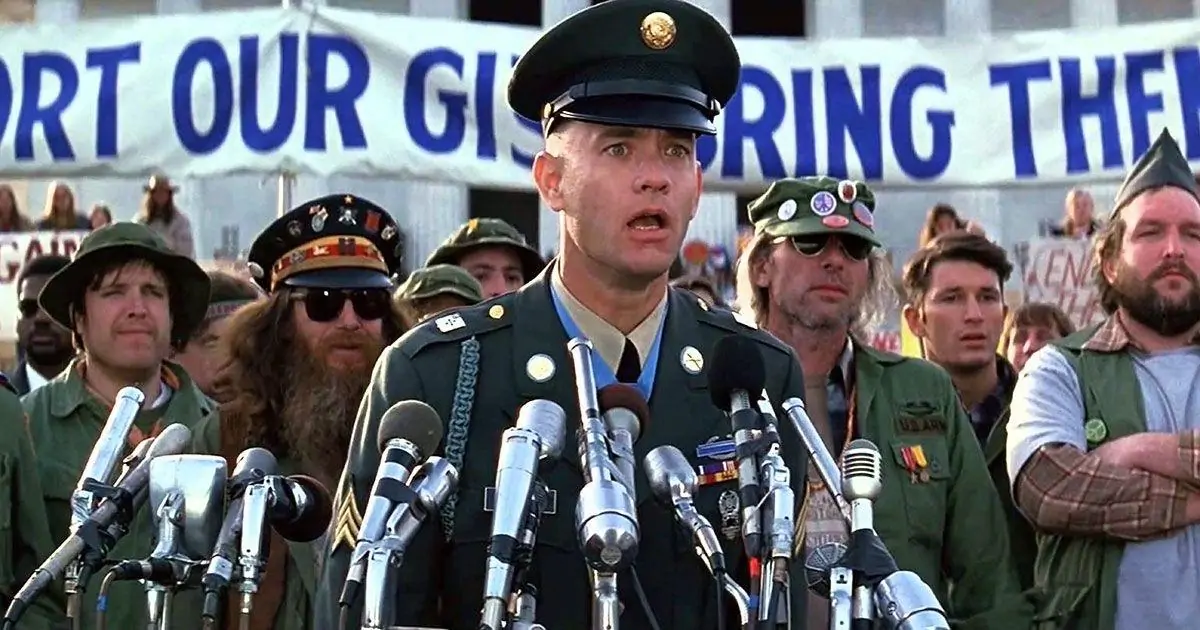

For over three decades, one of cinema’s most intriguing mysteries has kept movie fans debating in forums, Reddit threads, and late-night conversations. In Forrest Gump’s iconic Washington Monument scene, when our beloved protagonist steps up to address thousands of anti-war protesters, the microphone abruptly cuts out. We see Tom Hanks‘ lips moving, activist Abbie Hoffman wiping away tears, but we hear nothing. What could possibly have been so moving that it brought a hardened activist to tears?
According to Tom Hanks himself, the answer is both simpler and more profound than you might expect. The speech that moved Hoffman went like this: “Sometimes when people go to Vietnam, they go home to their mommas without any legs. Sometimes they don’t go home at all. That’s a bad thing. That’s all I have to say about that“.
That’s it. No grand political statement, no revolutionary rhetoric, just Forrest being Forrest, honest, direct, and heartbreakingly simple.
The speech that almost was
Here’s where it gets interesting for cinephiles. Director Robert Zemeckis and screenwriter Eric Roth actually struggled with this scene during production. Roth revealed in interviews that Zemeckis wanted something far more impactful, requesting a speech that was both funnier and more important. The pressure was so intense that Roth enlisted comedy legends Robin Williams and Billy Crystal to help craft the perfect words.
Nothing worked. Roth tried serious patriotic speeches and comedic approaches, but Zemeckis rejected everything. The solution? Pull the plug, literally. By silencing Forrest’s microphone, Zemeckis created something more powerful than any written speech could achieve, mystery, emotion, and a blank canvas for audience interpretation.
Why fans still obsess over this scene
The brilliance of the silent speech lies in what it represents. Some fans theorize it’s a meta-commentary on Vietnam itself, a war so complex and tragic that simple words fail to capture its horror. Others see it as Forrest’s character distilled to its essence: a man who cuts through political noise with pure, unfiltered humanity.
The scene has become a masterclass in filmmaking restraint. By showing us Hoffman’s emotional reaction without revealing the words, Zemeckis lets each viewer imagine what resonated most deeply with them about the Vietnam War experience. It’s Schrodinger’s speech, simultaneously everything and nothing, profound and simple, until you open the box and Tom Hanks tells you it was just Forrest being honest about missing legs and friends who never came home.
That’s cinema, folks. Sometimes what you don’t hear speaks louder than anything scripted could.
Want more deep dives into your favorite movie mysteries and geek culture? Follow Geek Realm Hub on X for daily doses of entertainment trivia that’ll blow your mind!