



When you think of Roblox, religious ceremonies probably aren’t the first thing that comes to mind. Yet across the globe, a groundbreaking movement is bridging the gap between faith and gaming in a way that’s capturing attention worldwide. Catholic masses are now being celebrated inside the blocky, colorful world of Roblox, and surprisingly, thousands of players are showing up, from Peru to Poland, the Philippines to the United States.
What started as scattered experimental approaches to reach younger generations has evolved into a worldwide phenomenon, complete with weekly masses, Holy Week processions, and even virtual sacraments. These digital parishes have become viral sensations, particularly on platforms like TikTok and Facebook, where livestreams of virtual ceremonies regularly attract thousands of concurrent viewers.
A global movement takes shape
The phenomenon isn’t confined to a single country or community. In Poland, the “Archdiocese of Gniezno” Discord server boasts over 28,000 members who organize virtual services that have become so popular that hundreds of players wait in line to attend. These Polish communities have recreated iconic religious sites like the Jasna Góra Monastery in Częstochowa with meticulous attention to detail, transforming the Marian pilgrimage site into an explorable digital space.
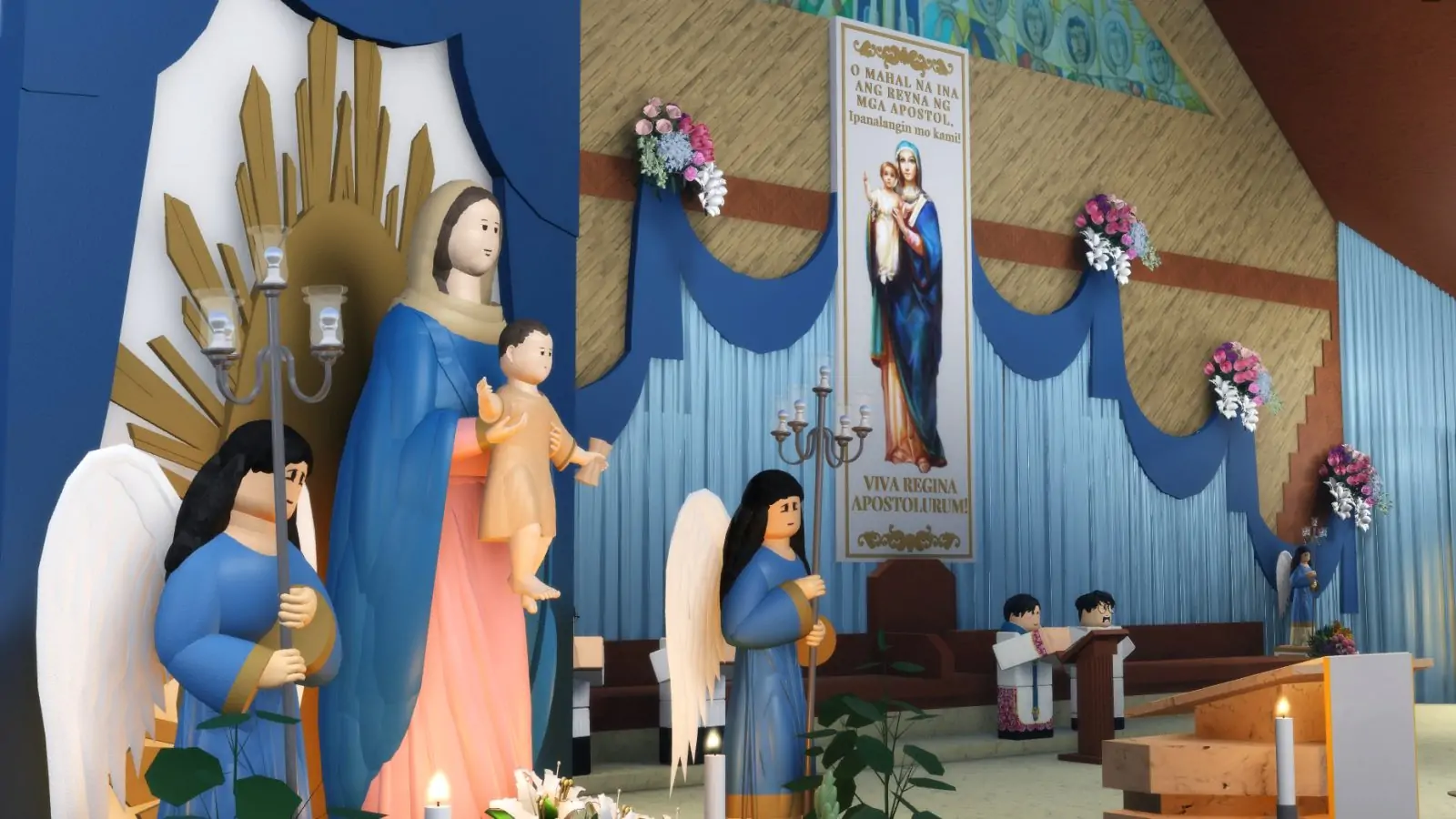
Meanwhile, in the Philippines, the Roblox Filipino Catholics group, active since 2014, has grown to approximately 5,000 members. They’ve taken the concept even further by organizing virtual versions of the Traslación, the massive annual procession honoring the Black Nazarene. During the COVID-19 pandemic, when the physical Traslación was cancelled, their 2021 virtual event attracted over 100,000 viewers on Facebook and up to 2,000 unique players on their servers during a six-hour livestream.
Peru’s contribution to this movement has been equally significant. Communities like “Catedral de Roblox” and “San Miguel de Viso” have created detailed replicas of churches from Huacho and other Peruvian cities. Their TikTok presence, particularly through accounts like @catedral_roblox, has garnered over 13,000 followers, with livestreams regularly drawing more than 3,000 concurrent viewers. The Peruvian communities have even partnered with actual churches, like Quiapo Church, to promote their virtual events.
Vietnam has joined the movement with its own Roblox Vietnamese Catholics community, while in the United States, channels dedicated to streaming masses from the Archdiocese of Los Angeles have emerged. International groups like the “Vatican City State of Roblox”, which has been active since 2011 ,serve a global audience, creating virtual representations of famous churches including Westminster Cathedral in London and the Sistine Chapel in Vatican City.
Building churches in a digital world
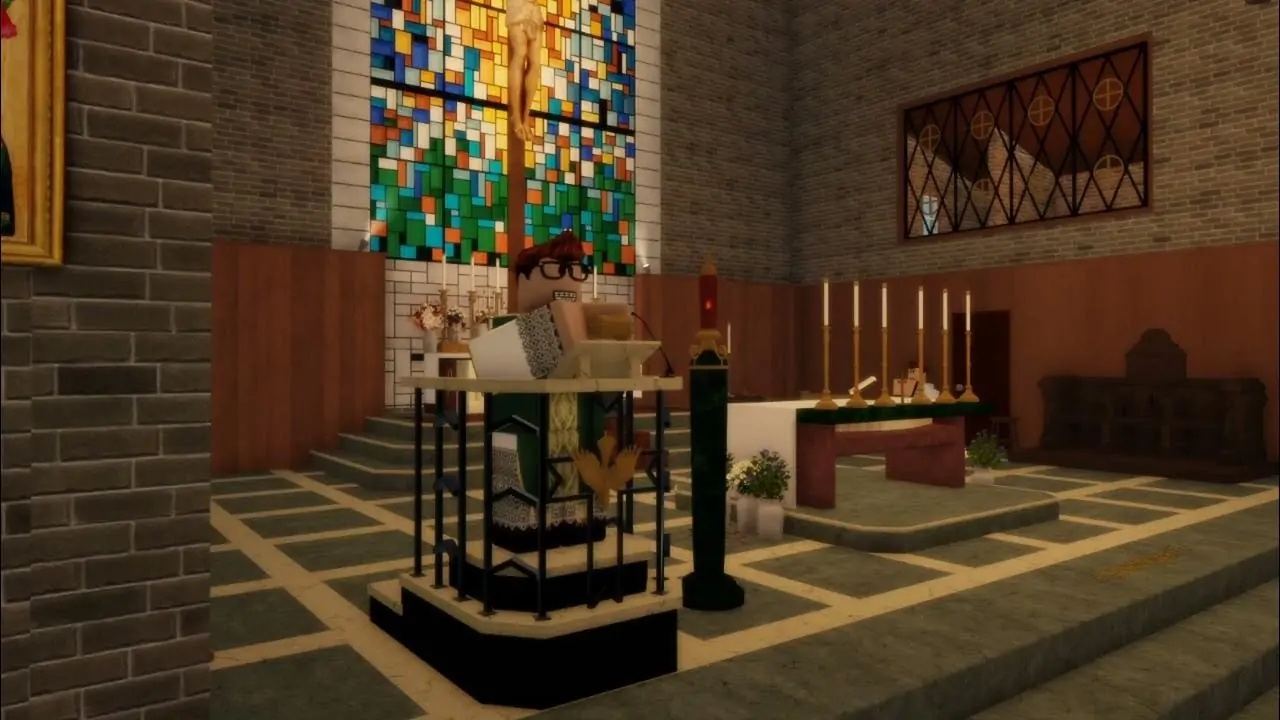
The concept is as simple as it is innovative. Using Roblox’s game creation tools, Catholics from around the world have constructed detailed replicas of real-world churches, complete with altars, religious images, and stained glass windows. These digital cathedrals serve as gathering spaces where players from different continents can attend mass, participate in prayers, and engage with liturgical celebrations—all through their customizable avatars.
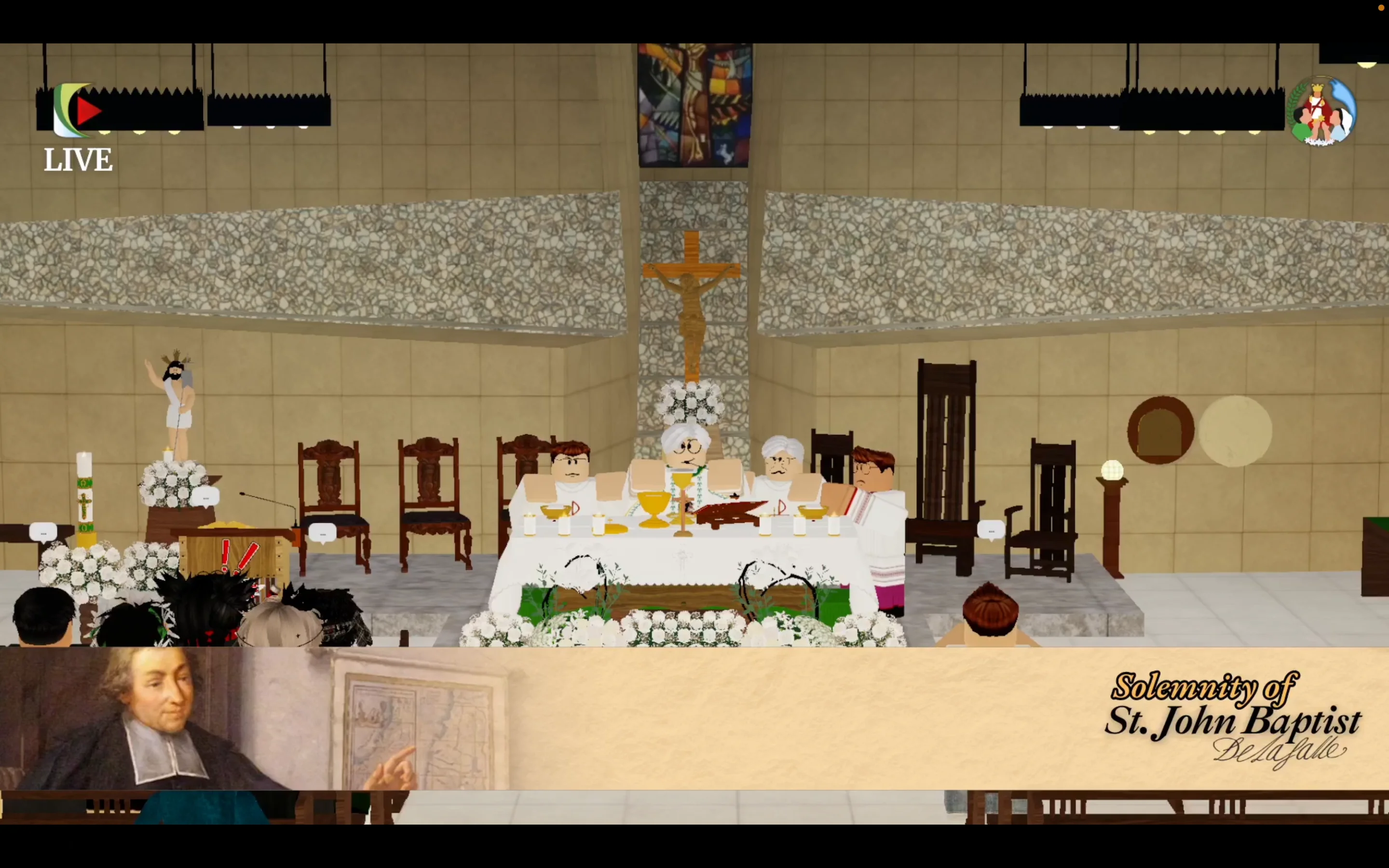
The masses themselves follow traditional Catholic liturgy. Priests or community leaders conduct services in real-time, with players listening to biblical readings, participating in communal prayers, and even receiving virtual communion. The experience mirrors a physical church service, albeit with one notable difference: the congregation consists of colorful, blocky avatars ranging from superheroes to animals to fantasy characters.
What makes this particularly fascinating is the level of seriousness and respect participants bring to these virtual gatherings. Despite the playful aesthetic of Roblox, attendees treat these masses with genuine reverence. Comments from participants across different countries reveal a mix of curiosity, appreciation, and authentic spiritual engagement. “I went to one in Roblox and they gave me communion,” one user shared. Another wrote, “I thought it was a joke at first, but I joined and the organization is serious.”
Holy days go digital
The initiative has proven especially powerful during major religious celebrations. During Holy Week 2024, communities across multiple countries organized full schedules of Passion Week events. From Palm Sunday blessings to Good Friday processions featuring the Virgin of Sorrows and the Entombed Christ, virtual celebrations attracted thousands of participants worldwide.
The visual spectacle of these digital processions is both surreal and captivating. Rows of diverse avatars march in formation through meticulously designed virtual streets, following digital representations of religious icons. The juxtaposition of sacred tradition and gaming culture creates a unique aesthetic that’s equal parts reverent and whimsical.
In the Philippines, the virtual Traslación has become an annual tradition, with the Minecraft Catholic Filipinos group also creating their own “CrafTraslación” events. These celebrations maintain regular schedules, with many communities hosting masses every evening and special celebrations for feast days, demonstrating a commitment to maintaining the full liturgical year within virtual spaces.
Why Roblox? Understanding the platform
For those unfamiliar, Roblox is a massively popular online gaming platform that allows users to create and share their own games and experiences. Launched in 2006, it’s available across PC, mobile devices, Xbox, PlayStation, and VR headsets. The platform generates over $2 billion annually and boasts more than 70 million daily active users worldwide, with a significant portion being children and teenagers, nearly two-thirds of users are under the age of 16.
The platform’s appeal lies in its creative freedom and social connectivity. Users can build virtually anything using Lego-like blocks and scripting tools, then invite others to explore their creations. This makes it an ideal environment for community-building projects, including, as it turns out, religious ones.
Countries with strong Catholic traditions like the Philippines (where Catholicism is practiced by a significant majority), Poland (one of Europe’s most Catholic nations), and Peru (where 74% of the population identifies as Catholic) have naturally become hotspots for this digital evangelization effort. The intersection of gaming culture and religious tradition represents a significant opportunity to engage younger generations who might otherwise feel disconnected from traditional church settings.
A new kind of evangelization
The motivation behind these virtual masses is clear across all communities: meeting young people where they already are. As traditional church attendance declines among younger demographics globally, religious leaders worldwide are exploring innovative ways to maintain relevance and connection. The Roblox Catholic movement represents one of the most creative approaches to this challenge.
Project organizers from different countries have been transparent about their goals. Through their social media presence, they emphasize that this isn’t about replacing physical church attendance but rather creating an additional access point for faith, particularly for those who might feel intimidated by or disconnected from traditional religious spaces. For some young people, attending a virtual mass might be their first exposure to Catholic liturgy, potentially serving as a gateway to deeper spiritual exploration.
The response from the gaming community has been overwhelmingly positive, even from non-believers. “I’ll go even though I’m an atheist because they’re really cool,” one commenter wrote. Another shared, “I’m Catholic and I think it’s good that religion adapts to people.” This openness suggests that the initiative is successfully breaking down barriers and creating dialogue between faith and secular gaming culture across cultural boundaries.
Theological concerns and pushback
Of course, not everyone is convinced this is appropriate. Some critics have raised concerns about the theological validity of virtual sacraments and whether the organizers have proper ecclesiastical authorization to conduct these services. Most groups are careful to include disclaimers stating that their simulated masses “hold no sacramental value” and are meant to educate young people about proper liturgical participation rather than replace actual sacraments.
Additionally, there are practical concerns about the platform itself. Roblox is primarily designed for children, and the presence of religious content raises questions about the separation of gaming and proselytization. However, defenders of the project argue that the masses are entirely voluntary and clearly labeled, allowing users to make informed choices about participation.
Despite these concerns, the initiative continues to grow globally. Even the Catholic Church has taken notice, with some priests commending the young organizers’ “knowledge of the liturgy.” In 2024, a Catholic priest launched MetaSaint, an officially sanctioned Catholic game on Roblox designed to bring the Gospel to “Generation Alpha” and the platform’s 70 million daily users, signaling institutional recognition of the platform’s evangelization potential.
The bigger picture
This phenomenon isn’t happening in isolation. It’s part of a broader trend of religious institutions embracing digital technology to maintain relevance in an increasingly online world. From livestreamed services during the COVID-19 pandemic to virtual reality prayer experiences, faith communities are experimenting with new ways to connect with believers.
What makes the Roblox masses particularly noteworthy is their target demographic and global reach. While many digital church initiatives focus on maintaining connections with existing congregants, these projects are explicitly designed to reach young people who might never set foot in a physical church. It’s evangelization for the gaming generation, conducted in their native digital language, transcending geographical and cultural boundaries.
The initiative also highlights the evolving nature of community in the digital age. For many young people, online spaces are just as “real” as physical ones. Friendships formed in games like Roblox can be deeply meaningful, and shared experiences in virtual worlds can create genuine bonds. By establishing a presence in these spaces, religious communities are acknowledging the legitimacy of digital life and meeting people in environments where they already feel comfortable and connected.
Andre Theng, a doctoral researcher at the University of Edinburgh who studies the intersection of online and offline space and religious discourse, notes that while these communities cannot be seen as part of the official Catholic Church hierarchy, “these spaces offer Catholics an opportunity to connect with each other along lines of shared interest, and can be a genuine opportunity to deepen their faith and explore vocations to religious life or priesthood.”
The evolution continues
As these projects continue to evolve globally, questions remain about their long-term sustainability and impact. Will participants eventually transition to physical church attendance, or will virtual parishes become permanent alternatives? How will church authorities respond as the initiative gains more visibility? And will other religious traditions follow suit with their own gaming-based outreach efforts?
What’s certain is that the global Roblox Catholic movement has sparked a conversation about the future of faith in digital spaces. From Poland’s elaborate monastery recreations to the Philippines’ virtual Traslación processions, from Peru’s TikTok-famous masses to international groups serving worldwide audiences, these communities have demonstrated that sacred and secular, traditional and innovative, don’t have to be mutually exclusive.
The sight of colorful avatars kneeling in digital pews might seem absurd at first glance, but it represents something profound: the enduring human need for community, meaning, and transcendence, expressed through the tools and platforms of our time. Whether you view it as a creative adaptation or a concerning trend, there’s no denying that virtual masses in Roblox are redefining what it means to gather in faith, and they’re doing it on a truly global scale.
In a world where young people spend increasing amounts of time in virtual environments, perhaps it’s only natural that spirituality would follow them there. And as these communities continue to grow and connect believers across continents, they’re proving that faith can flourish anywhere, even in a world made of blocks.
Stay connected with us for more stories exploring the unexpected intersections of technology, culture, and everyday life. Follow us to never miss the latest in geek culture and digital innovation.