



In the darkest corners of the internet, where childhood nostalgia collides with digital horror, video game creepypastas have carved out their own terrifying niche. These stories transform beloved games into vessels of supernatural dread, corrupting pixels and code into something that feels disturbingly real. The beauty, or perhaps the horror, of these tales lies in their ability to weaponize familiarity, turning games we once played in safety into sources of genuine unease.
Let’s venture into five of the most infamous video game creepypastas that have kept gamers up at night, second-guessing every glitch and unexplained occurrence in their favorite titles.
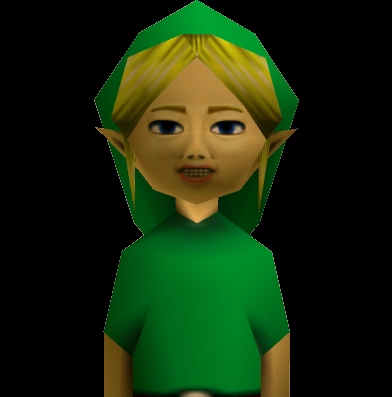
1. BEN Drowned: The Haunted Majora’s Mask
Imagine purchasing a used copy of The Legend of Zelda: Majora’s Mask at a yard sale from an elderly man. You take it home, excited to revisit a childhood favorite. But something is wrong. Terribly wrong.
The story of BEN Drowned revolves around a college student known only as Jadusable, who discovers that his secondhand cartridge is corrupted by something far worse than simple data decay. As he plays, he encounters a save file belonging to someone named “BEN,” and soon realizes he’s being followed, not by a glitch, but by an entity. The Elegy of Emptiness statues begin appearing where they shouldn’t, their hollow eyes seeming to stare directly at the player. Messages flash across the screen: “You shouldn’t have done that…” and the chilling question, “You’ve met with a terrible fate, haven’t you?”
What elevated BEN Drowned beyond a simple story was its multimedia approach. The creator posted actual gameplay footage of a modified ROM, showing the disturbing glitches and supernatural occurrences in real-time. Watching those videos feels like peering into something forbidden, the way Link moves with unnatural jerks, how the game seems to acknowledge the player’s presence, the way music distorts into something alien and wrong.
The entity calling itself BEN isn’t just haunting the game; it’s reaching through it, using the cartridge as a bridge between digital and physical reality. It knows your name. It can see you. And once you’ve played the haunted cartridge, you’ve opened a door that cannot be closed.

2. Lavender Town Syndrome: Pokémon’s Deadly Frequency
Every kid who played the original Pokémon Red and Blue remembers Lavender Town. The shift in tone was jarring, suddenly, in a game about befriending creatures and becoming a champion, you’re confronted with death. The Pokémon Tower looms over the town like a gravestone, filled with the spirits of deceased Pokémon. And that music… that high-pitched, unsettling melody that burrowed into your brain and stayed there long after you’d turned off your Game Boy.
But according to the Lavender Town Syndrome creepypasta, the music was far more dangerous than anyone realized. The story claims that the original Japanese release featured a version of the Lavender Town theme that contained frequencies specifically harmful to children. These frequencies allegedly triggered mass suicides among Japanese children, prompting Nintendo to quickly alter the music before the Western release.
The genius of this creepypasta is how it blends plausibility with horror. After all, there was a real incident where an episode of the Pokémon anime caused seizures in hundreds of Japanese children due to flashing lights. The Lavender Town music genuinely is eerie and uncomfortable, even to adults. And anyone who played those games remembers feeling that shift, that sudden realization that this cheerful world had darkness in it, that your Pokémon could die and be buried in that tower.
The creepypasta preys on those authentic memories of discomfort, amplifying them into something lethal. It suggests that the game wasn’t just creepy—it was weaponized, whether intentionally or accidentally. Every time you heard that music loop, it was slowly working on your brain, frequency by frequency, pushing you toward an unthinkable act.

3. Sonic.exe: I AM GOD
The blue hedgehog. Gaming’s most iconic speedster. A symbol of childhood joy for millions of players. Now imagine that same character, but wrong. Horribly, fundamentally wrong.
Sonic.exe tells the story of a teenager named Tom who receives a CD from his friend Kyle with a simple note: “DESTROY IT.” Naturally, Tom assumes it’s a joke and decides to play the mysterious disc, which contains what appears to be a PC port of the original Sonic the Hedgehog. But from the title screen, something is off. The colors are darker. Sonic’s eyes are bleeding. And when the game loads, only Tails, Knuckles, and Dr. Eggman are available as characters, Sonic himself cannot be selected.
Each character’s story plays out as a chase sequence, pursued through twisted versions of familiar levels by a demonic entity that looks like Sonic but is something far more sinister. Its eyes are black voids with glowing red pupils, leaking streams of blood. It doesn’t just kill the characters it catches, it tortures them, reveling in their fear. And the worst part? This entity, which calls itself X, knows you’re watching. It’s not just playing with the characters; it’s playing with you.
The final message that appears on screen chills players to their core: “I AM GOD.” This isn’t a corrupted file or a glitch. It’s something that has taken over the game entirely, something that feeds on fear and has been waiting in the code for someone to boot it up.
Though critics often point out the story’s writing flaws, Sonic.exe’s impact is undeniable. It spawned countless fan games, adaptations, and sequels. The image of blood-eyed Sonic has become one of the most recognizable horror icons from internet culture, proving that even the brightest childhood heroes can be transformed into figures of nightmare.

4. NES Godzilla: RED
Unlike most creepypasta that relies on quick scares and jump cuts, the NES Godzilla story unfolds like a descent into madness, slow, deliberate, and deeply unsettling. The protagonist, Zach, discovers an old cartridge of Godzilla: Monster of Monsters for the NES and decides to replay this childhood favorite. What begins as a nostalgic trip quickly becomes something far more sinister.
New levels appear that never existed in the original game, with ominous names like “Entropy” and “Dementia.” Unfamiliar monsters, creatures that never appeared in any Godzilla media, begin showing up with cryptic descriptions. The game’s difficulty spikes unnaturally. And then RED appears.
RED is a crimson skeletal monster that shouldn’t exist. It doesn’t follow the game’s rules. It pursues Godzilla relentlessly through levels, and unlike other enemies, it stares directly out of the screen at the player. The story is accompanied by meticulously crafted screenshots showing RED in various forms and stages, making the horror feel tangible and real.
As Zach plays deeper into the cursed cartridge, the game begins incorporating personal elements, references to his deceased girlfriend, Melissa. The line between the game and reality blurs as RED seems to know things about Zach that no game possibly could. The creature doesn’t just want to win; it wants to hurt him, to drag him into the game’s twisted world alongside the girlfriend he lost.
The climax involves an epic final battle where Zach actually feels the physical pain his in-game character experiences, each bite and burn from RED translating into real agony. What makes NES Godzilla so effective is its length and detail. It’s not a quick scare, it’s a journey that gradually strips away your sense of safety, leaving you questioning whether games can truly be just games, or if they can become doorways for something darker.
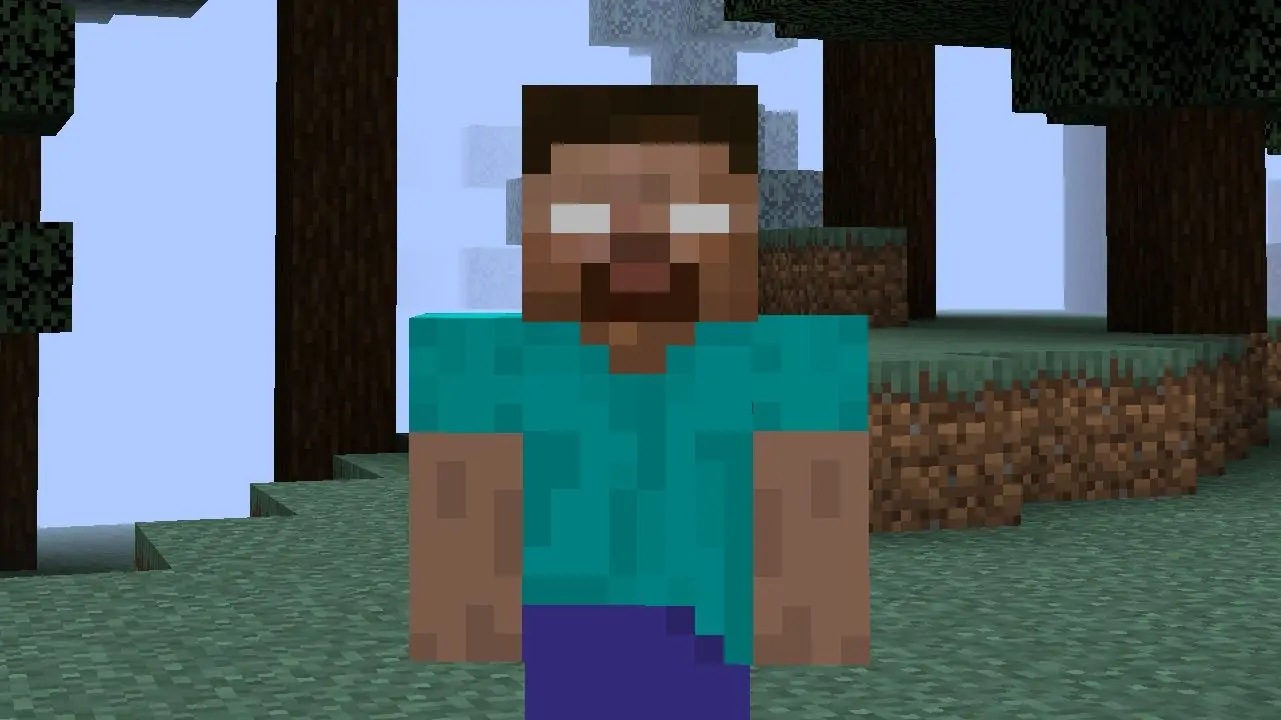
5. Herobrine: Minecraft’s Ghost
In the infinite procedurally generated worlds of Minecraft, where players are supposedly alone in single-player mode, there have been countless reports of something, or someone, watching from the shadows. Herobrine appears as a default player skin, identical to Steve, except for one crucial detail: his eyes are completely white, devoid of pupils, glowing with an otherworldly luminescence.
Players claim to spot him in the distance, standing motionless between trees or atop distant mountains. When they approach, he vanishes. Strange structures appear in their worlds, perfectly crafted tunnels, pyramids, and patterns that the terrain generation couldn’t have created. Forests are stripped of their leaves in perfect 2×2 patterns. And sometimes, in the dark of Minecraft’s night, they feel watched.
The legend grew to claim that Herobrine was the ghost of Markus “Notch” Persson’s deceased brother, haunting the game as a malevolent presence. Notch himself has repeatedly denied having a brother and stated that Herobrine is not real, but these denials only fueled the legend. After all, isn’t that what someone would say if they were covering up the truth?
What makes Herobrine particularly effective as a creepypasta is how it exploits the isolation inherent to Minecraft’s single-player experience. You’re supposed to be alone in your world, the only sentient being among the zombies and skeletons. But what if you’re not? What if something has slipped into your world, watching you build and mine and explore? The vastness of Minecraft’s worlds suddenly becomes oppressive rather than liberating, all that space for something to hide.
The myth has become so pervasive that Minecraft’s patch notes often joke about “removing Herobrine,” even though he was never actually in the game. Mods have been created to add him, creating a self-fulfilling prophecy where the legend manifests into reality. Players continue to share screenshots and videos claiming to show Herobrine encounters, keeping the myth alive years after its creation.
The Power of Digital Fear
These five creepypastas represent more than just scary stories, they’re a new form of folklore for the digital age. They take the games that shaped childhoods and twist them into sources of dread, exploiting our emotional connections to these virtual worlds. The most effective creepypastas understand that true horror comes not from what’s obviously scary, but from corrupting what we once trusted.
They teach us that glitches might not be accidents. That used cartridges could carry more than just save data. That being alone in a game doesn’t mean you’re truly alone. They transform the familiar into the uncanny, making us question whether our games are entirely under our control, or if something else has been playing along, waiting patiently in the code for the right moment to make itself known.
So the next time you boot up an old game, or notice a strange glitch you can’t explain, or feel an inexplicable chill while playing alone in your room… remember these stories. Remember that in the digital world, not everything that seems alive was meant to be. And sometimes, when you stare into the screen, something stares back.