



Amazon Prime Video has found itself at the center of a heated controversy after quietly releasing AI-generated English and Spanish dubs for the beloved 2018 anime Banana Fish. What should have been a celebration for fans who waited years for an official English dub has instead turned into a flashpoint debate about artificial intelligence, artistic integrity, and the future of voice acting.
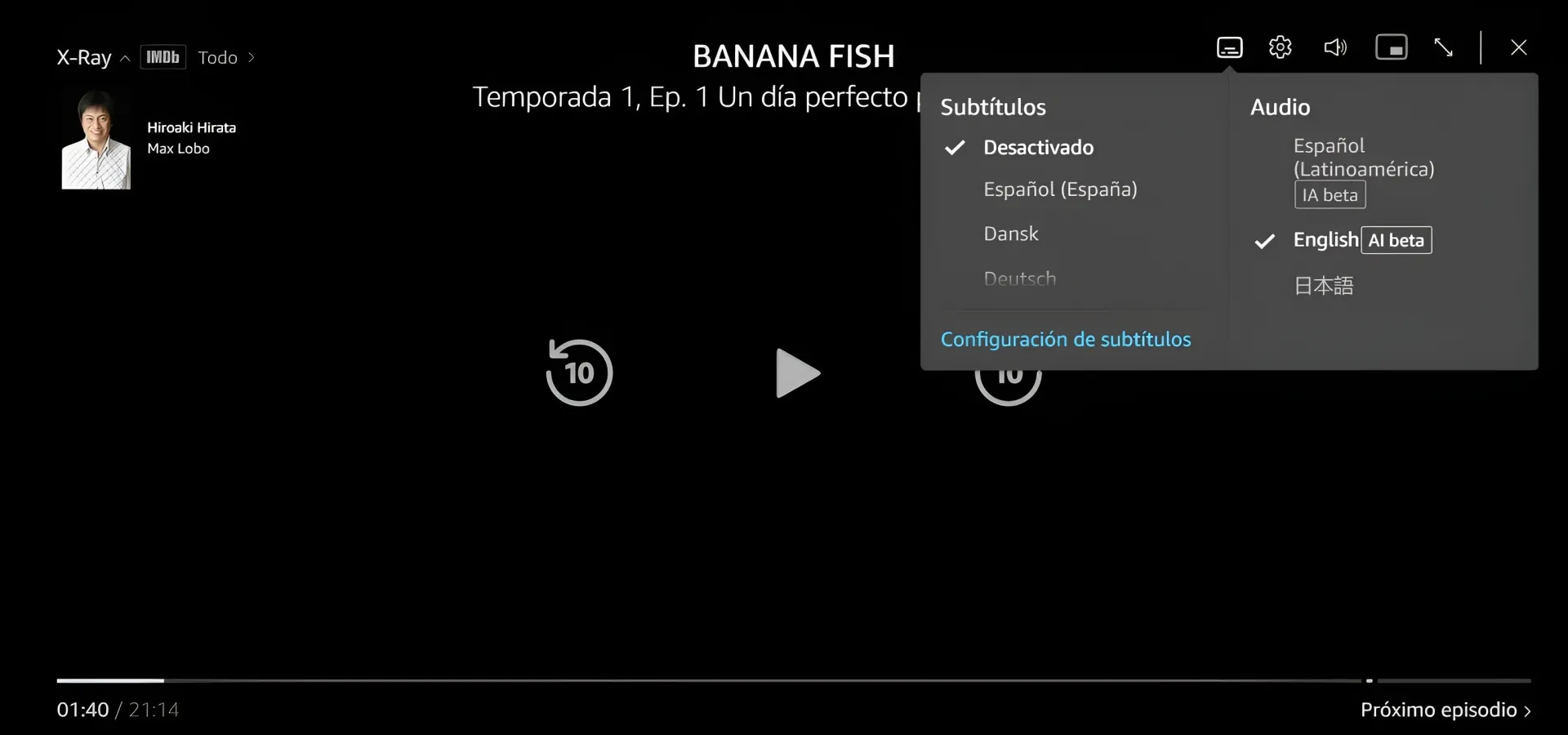
The streaming giant made no secret of its experiment. When viewers select audio options for Banana Fish, they’re greeted with tracks clearly labeled “English (AI Beta)” and “Spanish (Latin America) (AI Beta).” While transparency might seem commendable, the execution has been anything but well-received. Fans and industry professionals alike are calling out the robotic delivery, flat emotional tones, and dialogue that doesn’t even match the on-screen subtitles.
Why this matters more than you think
Banana Fish isn’t just another anime series. Based on Akimi Yoshida’s acclaimed manga, the MAPPA-produced adaptation tells the gritty story of Ash Lynx, a New York gang leader caught in a web of conspiracy, trauma, and violence. The series has earned particular praise for its nuanced portrayal of LGBTQ+ themes and complex character relationships—exactly the kind of emotionally charged material that demands skilled voice performances.
Prominent voice actor Daman Mills, known for his work on Dragon Ball Super, didn’t mince words when addressing Amazon’s decision. He questioned the logic of using artificial intelligence for a narrative centered on queer trauma, especially when the company has the resources to hire professional talent. Mills noted that union voice actors typically earn between $125-$150 per hour, hardly a budget-breaking expense for a multi-billion dollar corporation.
What makes this situation particularly frustrating is the timing. Anime has reached unprecedented global popularity, with multiple anime films becoming some of the highest-grossing animated features of recent years. The industry is thriving, making Amazon’s cost-cutting measure feel especially tone-deaf.
The quality problem nobody can ignore
Setting aside the ethical concerns for a moment, there’s a more immediate issue: the AI dub simply isn’t good. Early listener reports describe voices that sound disconnected from the characters, inconsistent pacing, and a complete absence of the emotional nuance that makes voice acting an art form. For a series as emotionally heavy as Banana Fish, these technical shortcomings aren’t just noticeable—they’re deal-breakers.
This isn’t Amazon’s first rodeo with dubbing anime. The company previously produced well-regarded English dubs for the Rebuild of Evangelion films using professional voice actors. The contrast between those productions and this AI experiment makes the current situation even more baffling.
What comes next?
Amazon Prime Video has not issued an official comment on the dub’s creation process or the mounting backlash. The silence has only fueled speculation about whether this is a one-off experiment or a preview of things to come for the platform’s anime catalog.
The broader implications extend beyond one series. If major streaming platforms normalize AI dubbing for cost savings, it could fundamentally reshape the voice acting industry. While AI technology continues to improve, current results demonstrate we’re nowhere near replicating the depth and authenticity that human performers bring to their roles.
For now, Banana Fish fans are left with an uncomfortable choice: endure a subpar AI dub, stick with subtitles, or skip the series entirely in protest. None of these options feel particularly satisfying for a community that’s been waiting years for proper localization.
The anime community has made its position crystal clear—they value craftsmanship over convenience, and no amount of technological “innovation” will replace the human element that makes great dubbing great. Whether Amazon will listen remains to be seen.
Want to stay updated on the latest developments in anime, gaming, and geek culture? Follow Geek Realm Hub for breaking news, in-depth analysis, and the stories that matter to our community.