



Dan Trachtenberg’s journey to Predator: Badlands took an unexpected detour through World War II before arriving at its final, groundbreaking destination. The visionary director who revitalized the franchise with Prey and Predator: Killer of Killers has pulled back the curtain on a fascinating what-if scenario that nearly became reality: a Predator unleashed against Nazi forces in the 1940s.
The revelation came during a candid conversation with Screen Rant, where Trachtenberg walked through his creative process and the evolution of what would eventually become Badlands. What emerges is a story about listening to fans, wrestling with franchise expectations, and ultimately finding something even more daring than the original concept.
The question that started it all
Every great creative decision starts with a question, and for Trachtenberg, it was one that had been echoing through the Predator fandom for decades: why does the galaxy’s most fearsome hunter keep losing?
The director found himself drawn to this persistent fan observation. Here was a creature designed to be the ultimate apex predator, yet film after film showed it being outsmarted, outfought, or outmaneuvered by humans. Trachtenberg saw an opportunity to flip the script entirely.
“It really was from trying to figure out what the franchise had done before,” Trachtenberg explained. “There was this fan-grown sentiment of ‘Why does the Predator always get his ass kicked?’ He’s supposed to be the galaxy’s greatest hunter and we always see him lose!”
Wrestling with victory
The challenge wasn’t just about letting the Predator win. Anyone can write a story where the monster kills everyone and walks away. The real artistic puzzle was crafting a narrative where the Yautja emerges victorious without sacrificing emotional depth or turning the film into a hollow slasher.
“So I tried to figure out a story that embraces, ‘What if the Predator wins?’ But I didn’t want to just make a slasher movie where the bad guy wins in the end,” Trachtenberg shared.
This creative tension led him down some intriguing paths. The WWII concept emerged naturally from this struggle. What better way to let a Predator win without making audiences root against humanity than by pitting it against history’s most universally reviled villains?
“At first, I was like, ‘Well, maybe it could be him versus Nazis or something,'” the director recalled. But something wasn’t clicking. The concept, while compelling on paper, didn’t spark the creative fire Trachtenberg was searching for.
Finding the real story
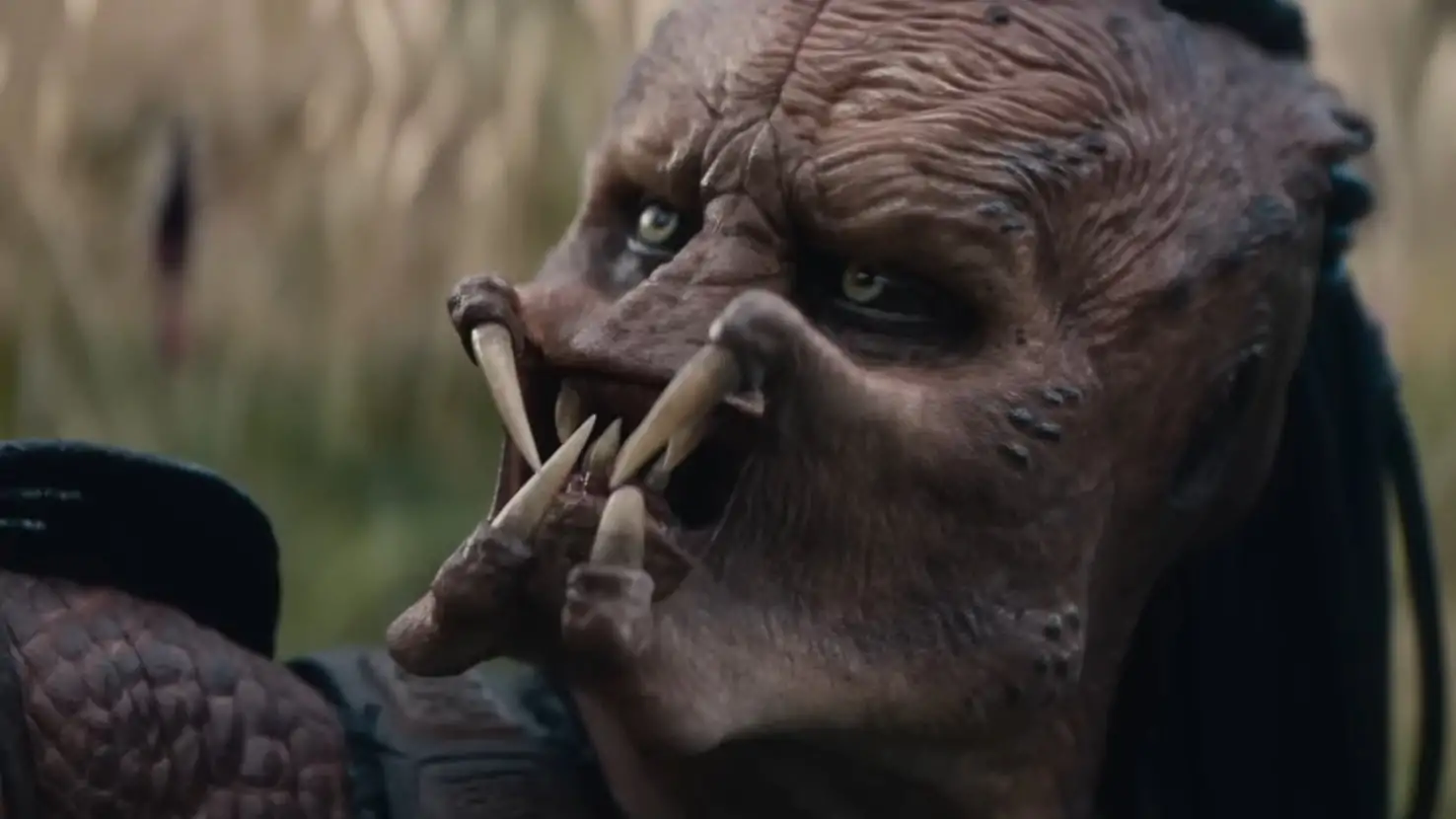
The breakthrough came when Trachtenberg shifted his focus from who the Predator was fighting to what the Predator was fighting for. Instead of external enemies, he discovered a more intimate conflict: a Yautja struggling to prove itself within a brutal, unforgiving clan structure.
“None of it really clicked until I found my footing in making it about a Predator in an insanely intense, brutal clan that’s trying to prove its worth,” Trachtenberg revealed.
This pivot represents the true innovation of Badlands. For the first time in franchise history, the Yautja isn’t just the antagonist or even an anti-hero, it’s the protagonist, with its own arc, struggles, and motivations that audiences can understand and perhaps even empathize with.
Why the WWII concept still matters
Just because Trachtenberg moved away from the Nazi-hunting concept doesn’t mean it lacks merit. In fact, the idea remains tantalizing for several reasons that extend beyond simple spectacle.
The World War II setting offers something the Predator franchise has rarely explored: moral clarity. When your prey are Nazis, the ethical complications of the hunt largely evaporate. The Yautja’s violent methods become almost cathartic rather than horrifying, allowing for a completely different emotional experience.
There’s also rich historical texture to mine. Bombed-out European cities, dense forests hiding partisan fighters, claustrophobic bunkers, and the chaos of massive military operations would provide the Predator with hunting grounds unlike any we’ve seen. The period’s limited technology would shift the power dynamic in fascinating ways, while the scale of WWII warfare would test even a Yautja’s capabilities.
Fans already glimpsed this potential in “The Bullet” chapter from Killer of Killers, which offered a brief taste of Predator-meets-WWII action. The response suggested serious appetite for more.
Building a universe, not just a movie
Trachtenberg’s approach to the Predator franchise echoes the early Marvel Cinematic Universe playbook: establish individual stories with their own identity before attempting any grand unification. He’s explicitly avoiding the rush to crossover events that led to films like Alien vs. Predator.
A WWII-set Predator film fits perfectly within this framework. It would be self-contained enough to stand alone while expanding the franchise’s temporal and geographical scope. The historical setting naturally separates it from other entries, giving Trachtenberg freedom to experiment without disrupting established continuity.
The scale could also remain relatively intimate. Unlike the sprawling clan warfare of Badlands, a WWII story could focus on a single Yautja conducting a personal hunt across the European theater. Think Prey‘s focused approach transplanted to the 1940s.
What makes it work now
Telling a story from the Yautja’s perspective, represents a natural next step in this evolution. A WWII setting provides the perfect backdrop for this experiment. The Predator isn’t hunting innocents; it’s hunting soldiers actively engaged in history’s deadliest conflict.
This premise also allows Trachtenberg to explore questions about honor, warfare, and the nature of worthy prey. What draws a Yautja to human conflict? How does it distinguish between combatants? What happens when its code of honor intersects with humanity’s own moral struggles?
The road ahead
As Badlands prepares for release with promising early reactions, Trachtenberg’s position as the franchise’s creative architect seems secure. Each success buys him more creative freedom, more opportunity to explore the corners of this universe that intrigue him.
The Nazi-hunting concept hasn’t been executed, but it hasn’t been forgotten either. Trachtenberg clearly still thinks about it, bringing it up unprompted when discussing his creative process. That suggests it remains in his mental archive of “stories to tell when the time is right.”
Whether that time comes after Badlands, after whatever he has planned next, or perhaps never at all remains to be seen. But the tantalizing possibility lingers: somewhere in the Predator franchise’s future, a Yautja might yet stalk through the ruins of WWII Europe, turning the hunters into the hunted.
A different kind of war story
What makes the shelved WWII concept so compelling isn’t just the genre mashup or the guilt-free action. It’s what it represents about where the Predator franchise can go when creative minds are given room to experiment.
Trachtenberg’s willingness to share this abandoned idea also speaks to his collaborative relationship with fans. He’s listening to what they want, processing their critiques, and using that feedback to push the franchise in unexpected directions, even if those directions aren’t always the obvious ones.
Predator: Badlands may have emerged from questioning why the Predator always loses, but it arrived at an answer more sophisticated than simply letting it win. Instead, Trachtenberg reframed victory itself, making it about internal struggle rather than external conquest.
Still, there’s something undeniably appealing about the simplicity of that first instinct: a Predator, loose in occupied Europe, hunting the most deserving prey imaginable. Sometimes the straightforward ideas are the ones that stick with you.
For now, fans can look forward to whatever bold direction Badlands takes the franchise. But in the back of their minds, and apparently in Trachtenberg’s as well, that alternate timeline persists, waiting for its moment to become real.