



We keep stumbling upon graphics cards that never made it to store shelves, and today’s discovery is particularly intriguing: a physical NVIDIA GeForce RTX 3080 Ti with 20GB of VRAM, complete with Founders Edition-style design and even retail packaging ready to go.
This isn’t just another engineering sample—the existence of finished packaging suggests this card came incredibly close to an actual retail launch before disappearing entirely.
A trail of digital breadcrumbs
The story of this phantom GPU goes back to 2020, when rumors started circulating about NVIDIA prepping Ampere architecture cards with beefier VRAM configurations.
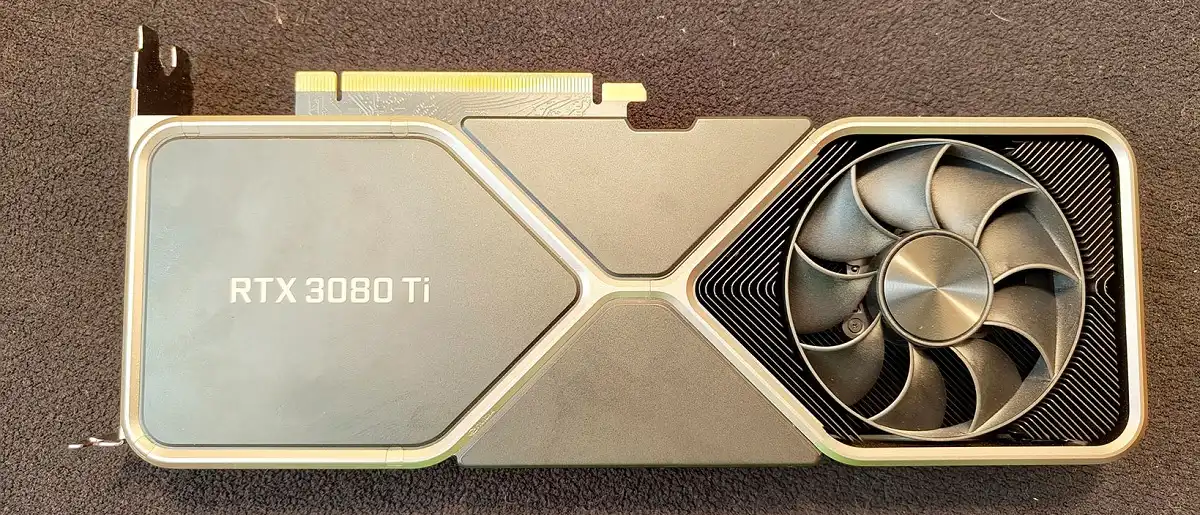
The evidence kept piling up: import listings showing 20GB models, leaked firmware files pointing to their existence, and even sightings of customized RTX 3080 Ti 20GB units in Russia that looked ready for sale but never hit official distribution channels.
Then in 2021, a leaked BIOS surfaced confirming these 20GB variants were real, with some configurations even featuring higher power limits to push the chip harder.
What we’re seeing now are the physical remnants of a product that NVIDIA developed, manufactured, and then quietly shelved.
The technical compromise
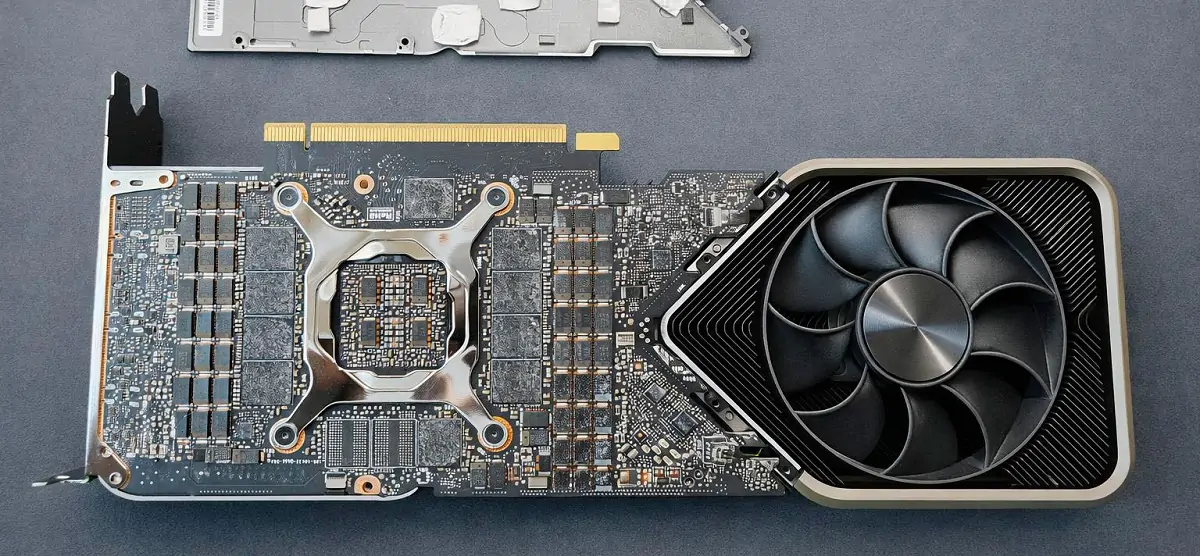
To fit those 20GB, NVIDIA borrowed the RTX 3090’s playbook, soldering memory chips on both sides of the PCB. This meant the cooling system had to work double duty, managing thermal loads from memory on both the front and back of the board.
But here’s where things get interesting, that extra VRAM came with a catch. The memory interface was limited to 320 bits, a downgrade from the 384-bit bus on the 12GB model that eventually shipped.
This bandwidth reduction was necessary to avoid stepping on the RTX 3090’s territory, but it created a performance bottleneck that would’ve hurt the card at 4K resolutions where memory bandwidth matters most.


These surviving units exist in a weird technical limbo. NVIDIA never released official driver support for them, so while they can output video signal, they won’t work with standard GeForce drivers.
Owners have to use third-party tools like NVIDIA-patcher to bypass device verification checks just to get 3D functionality working. Every driver update risks breaking compatibility, and the firmware is heavily locked down. For professional workloads like rendering or computation, many applications simply block these prototype cards from running. They’re collector’s items more than functional hardware.
Some of these cards have popped up for sale despite carrying “Not for Sale / Development Only” warnings printed directly on the GPU. There have also been cases where cards were sold as standard RTX 3080 Ti models, only for buyers to discover they’d purchased engineering samples instead.
The whole situation confirms what the leaked documentation suggested all along: NVIDIA built functional hardware, got far enough to design packaging, but ultimately decided against bringing the 20GB variant to market. What remains are the ghosts of a cancelled launch, physical proof that this GPU existed beyond just rumor and speculation.
Want more stories about unreleased tech and GPU deep dives? Follow Geek Realm Hub on Facebook and catch all the hardware news that matters!