



The Wall Street Journal reported today citing people familiar with NVIDIA’s supply chain, that the N1 and N1X chips are on track to launch in the first half of 2026.
Dell and Lenovo are already working with the chipmaker on the first laptops to carry them, making both companies the earliest OEMs to bet on NVIDIA’s most ambitious consumer hardware move in years. The chips are developed in partnership with MediaTek and are built on Arm architecture, the same foundation powering Apple’s MacBook lineup.
NVIDIA’s annual GTC conference, scheduled for March 16–19, 2026, has been floated by multiple analysts as a possible stage for the N1/N1X reveal, though nothing has been officially confirmed.
Most analysts actually expect the spotlight at GTC to fall on NVIDIA’s Vera Rubin AI accelerators rather than the consumer chips.
Up to 20 CPU cores and RTX 5070-level graphics, all in one chip
The N1 and N1X are SoCs, meaning they integrate the CPU, GPU, and NPU into a single chip with no discrete graphics card required.
According to Geekbench leaks, the N1X features up to 20 CPU cores split across two 10-core clusters, and an integrated GPU with CUDA core counts comparable to a desktop RTX 5070.
Jensen Huang himself confirmed that the GB10 Superchip powering the DGX Spark mini PC is based on N1 silicon, giving the leaked specs real credibility.
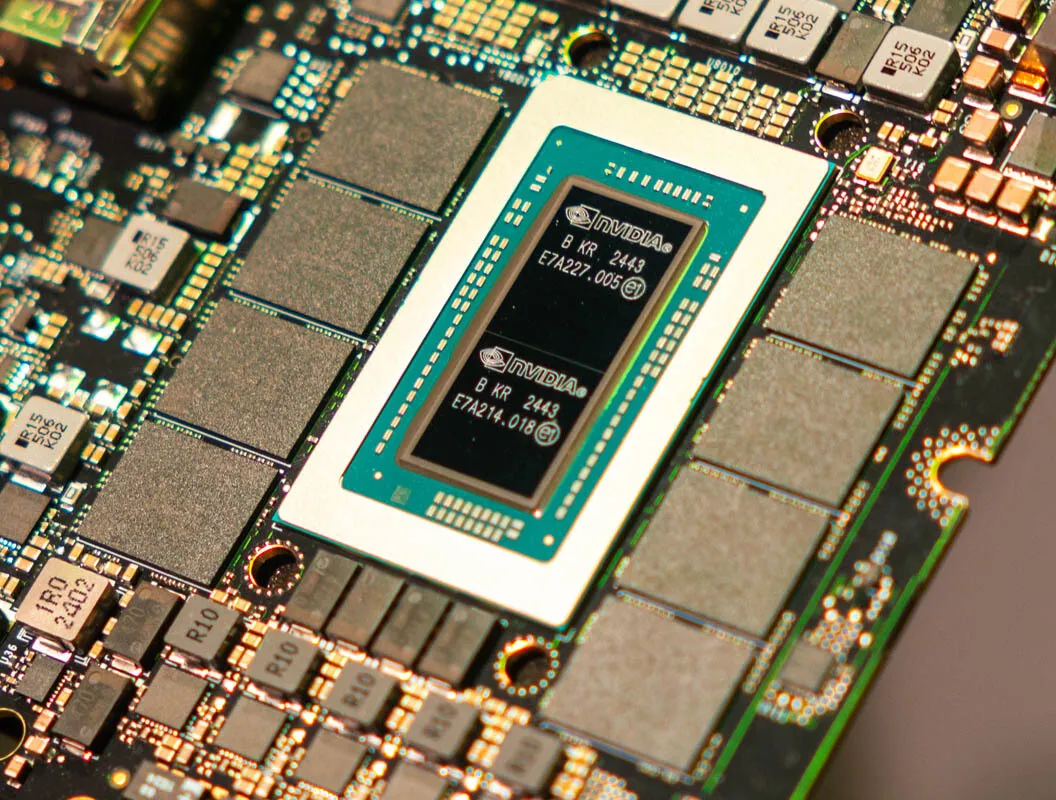
NPU performance is also said to surpass current Intel and AMD processors, making these Copilot+ PC candidates capable of running AI workloads entirely on-device.
Dell and Lenovo are preparing at least 8 laptops
Lenovo’s confirmed lineup includes 14-inch and 16-inch IdeaPad Slim 5 models, two Yoga Pro 7 notebooks, a Yoga 9 2-in-1, and a 15-inch Legion 7 gaming laptop.
Dell is also preparing an Alienware gaming laptop and an XPS notebook powered by the N1X, bringing the total to at least eight devices across both brands.
Lenovo has even set up an internal login-protected “NVIDIA N1X Portal,” a sign that the platform has moved well beyond early development and into active deployment preparation.
A shipping manifest dated November 20, 2025, revealed a “Dell 16 Premium” unit carrying an N1X engineering sample in active testing, a device that has since been rebranded as part of Dell’s return to the XPS line in 2026.
The Legion 7 angle stands out in particular. Qualcomm’s Snapdragon X chips have prioritized power efficiency over gaming, leaving a gap in the Windows on Arm market that NVIDIA is clearly aiming to fill, backed by decades of GPU driver expertise and deep relationships with game developers.
Price will make or break it
NVIDIA is positioning the N1/N1X directly against Apple’s M-series MacBooks, and Microsoft is reportedly counting on these chips to accelerate Windows on Arm adoption in a way Qualcomm never managed.
The hardware story is compelling, but DigiTimes analyst Jason Tsai warned the N1/N1X risks becoming a niche luxury product unless laptops land around the $1,500 range.
With memory prices climbing across the industry right now, hitting that number will not be easy, and how NVIDIA and its OEM partners handle pricing could ultimately determine whether this becomes a turning point for Windows laptops or just another promising chip that never reached its potential.
What do you think, is NVIDIA finally the one to take on Apple Silicon on Windows, or will pricing kill the hype before it even gets started? Let us know in the comments!