



At GDC 2026, NVIDIA threw out a number that sounds almost fictional: one million. That’s how much better path tracing performance the company says future gaming GPUs will deliver compared to the Pascal generation from a decade ago. And before you roll your eyes thinking this is just Jensen Huang doing Jensen Huang things, there’s actual math behind it, and the story starts with where things already stand today.
According to the presentation at GDC 2026, current Blackwell GPUs, the RTX 50 series, are already 10,000 times faster at path tracing than the Pascal cards from ten years ago. So NVIDIA isn’t building toward one million from zero. It’s building from 10,000. That’s a very different conversation.
Path Tracing is not your average Ray Tracing toggle
Path tracing is the real thing. It’s the rendering method used in Hollywood productions, where light actually behaves like light, bouncing off surfaces, bleeding color onto nearby walls, casting soft shadows, passing through glass the way it does in real life. It’s what makes a scene look like it was filmed rather than rendered.
The issue is cost. Running this in real time, at playable frame rates, is extraordinarily demanding. Traditional rasterization, the technique powering the vast majority of games today, fakes lighting through clever tricks. It’s fast, it works, and it’s been the industry standard for decades. But it can’t truly replicate physical light behavior. Path tracing can. And that gap is exactly what NVIDIA is trying to close.
The starting point of NVIDIA’s roadmap is the Pascal architecture, which powered the GTX 10-series GPUs released in 2016. Revolutionary at the time, Pascal relied entirely on software-based ray tracing, making real-time path tracing essentially impractical. Cards like the GTX 1080, launched in May 2016 at $599 and considered one of the most powerful consumer GPUs of its era, had zero dedicated hardware for ray calculations.
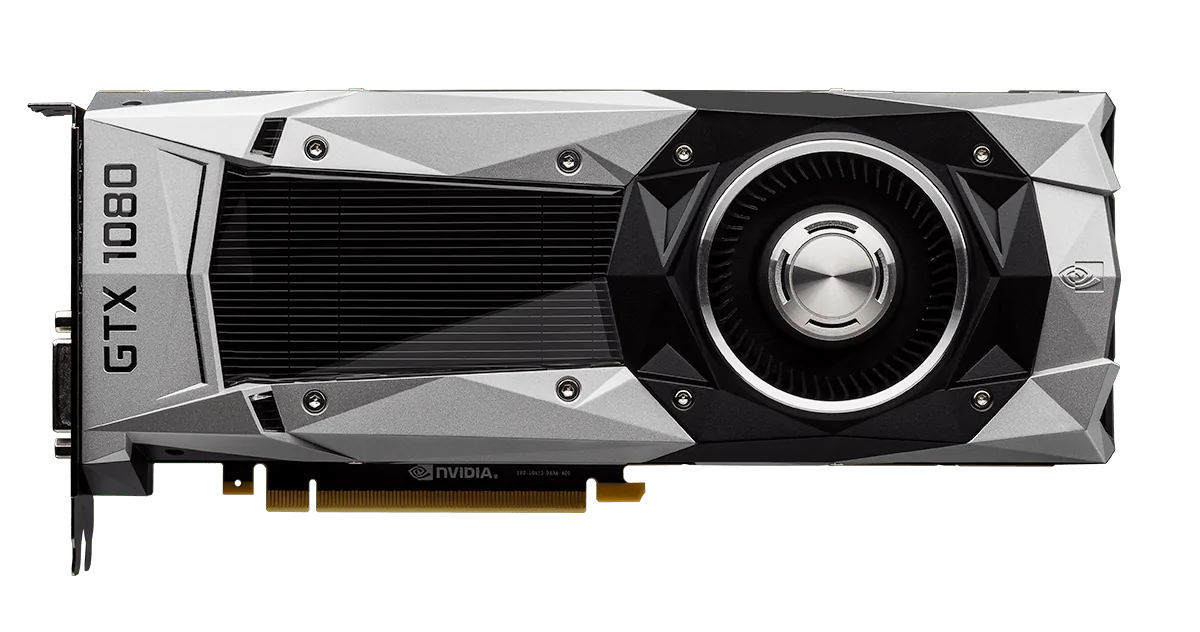
Every single ray had to be processed in software, eating into the GPU’s general compute budget. It was slow, expensive, and nowhere near usable for actual games.
The first real turning point came with Turing and the RTX 20 series in 2018, the architecture that introduced hardware-accelerated ray tracing and launched both DLSS and the RTX brand. From there, Ampere and Ada Lovelace kept pushing the hardware further, adding faster RT cores and more powerful Tensor cores with every generation.
But raw hardware wasn’t the whole story. According to NVIDIA VP John Spitzer, the gains are multiplicative, fourth-generation RT cores, third-generation Tensor cores, and DLSS 4.5, which today can infer 23 out of every 24 pixels rendered, all stack on top of each other. Combine that with algorithmic improvements in how rays are traced per frame, and you arrive at the 10,000× figure.
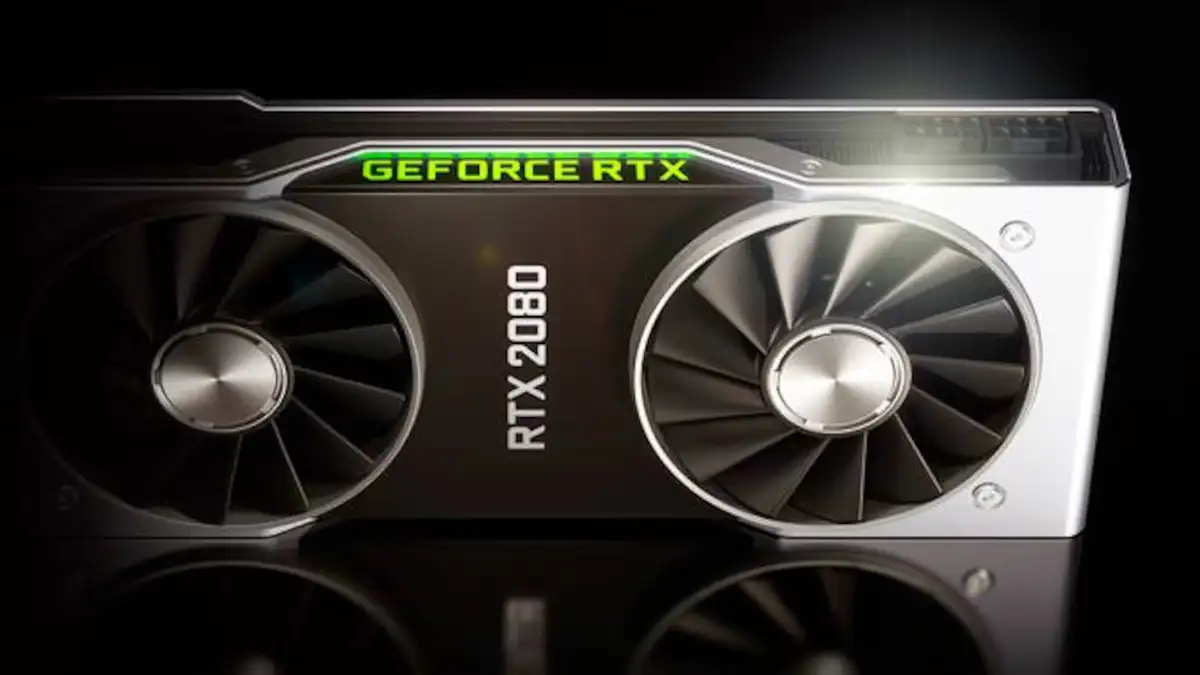
DLSS alone evolved from a basic upscaling tool into a full neural rendering system. It’s entirely reliant on AI, the ability to reconstruct frame data accurately in both upscaling and frame generation is only possible thanks to models trained on NVIDIA’s supercomputers. It’s not just making your image bigger. It’s rebuilding frames the GPU never actually rendered, from scratch, using AI.
So how does NVIDIA get from 10,000× to 1,000,000×?
More of the same, but pushed to an extreme.
Spitzer was blunt about it during the presentation: “Moore’s Law is dead. We are not going to see a 100 times improvement in my lifetime in terms of silicon.” That’s a striking thing to hear from one of the most powerful GPU companies on the planet. It means the old formula, wait a couple of years, get faster chips, get better graphics, is no longer enough. Getting to a level of fidelity indistinguishable from real life would require a hundred or thousand times more computational power, and that’s where AI becomes the catalyst.
The next-generation Rubin GPUs, expected between 2027 and 2028, are positioned to deliver this leap, aligning with CEO Jensen Huang’s vision of games that “look like a film” while running smoothly thanks to real-time AI frame interpolation.
Two new technologies announced at GDC point directly at this future. ReSTIR PT improves glossy reflections and path reuse, while the new RTX Mega Geometry foliage system is designed for dense, path-traced environments. ReSTIR works smarter instead of harder, reusing light data from neighboring pixels and previous frames rather than brute-forcing more rays into a scene.
RTX Mega Geometry, on the other hand, tackles one of path tracing’s nastiest problems: rendering environments with extreme geometric complexity, like forests packed with millions of individually animated leaves. To show it in action, NVIDIA brought a Witcher 4 tech demo featuring over two trillion triangles of realistic foliage and lighting running simultaneously. Two trillion. Not a typo.
The games already there, and the fine print
The ecosystem is already moving fast. Games like Cyberpunk 2077 and Alan Wake 2 have already experimented with full path tracing. Cyberpunk’s Overdrive mode was one of the first mainstream AAA examples of the technique in action, and it hit even top-tier hardware extremely hard at launch. Minecraft RTX showed the other side of the coin, that path tracing can completely reinvent a game’s look even when the underlying art style is made of blocks.

More recently, Resident Evil Requiem launched with full path tracing support, including multi-light shadows, reflections, and refractions. The list of games adopting the technology keeps growing, and as of early 2026, over 950 games and applications already feature some form of RTX support. That’s not a niche feature anymore, that’s a platform.
Now for the honest part. NVIDIA never specified exactly which future GPU generation would hit the 1,000,000× mark. It might be Rubin. It might be something further out. And a significant portion of those gains comes from AI reconstructing and generating frames the GPU never actually rendered, not from raw processing power alone. If the hardware is only rendering one out of every several frames while AI fills in the rest, is calling that a million times faster completely accurate? It depends entirely on how you count.
What isn’t up for debate is the end result. Smoother performance, lighting that behaves like real light, visuals that look like they belong in a film. NVIDIA’s long-term vision points toward path tracing eventually replacing rasterization as the default rendering method across the entire gaming industry. Whether that happens in three years or ten, the direction is clear. The only real question is how long the wait will be.
Do you think we’re ready for a future where every game looks like a movie? Let us know what you think in the comments!