



Mozilla just dropped a major announcement that’s sending shockwaves through the browser ecosystem. Anthony Enzor-DeMeo, who’s been running Firefox as general manager since August, officially stepped into the CEO role on December 16, replacing interim chief Laura Chambers. But here’s the kicker, his first day on the job came with a bold declaration: Firefox is evolving into a “modern AI browser” over the next three years.
The timing couldn’t be more critical. With Chrome commanding roughly 65% of desktop market share and Firefox sitting at a modest 3%, Mozilla’s betting big that AI integration, done the Mozilla way, could be the competitive edge they desperately need.
The AI window: Mozilla’s strategic play
At the heart of this transformation sits AI Window, Firefox’s upcoming dedicated AI browsing mode set to launch in 2026. Unlike Edge’s Copilot or Chrome’s Gemini integration, Mozilla’s approach centers on user choice rather than vendor lock-in. Think of it as a third browsing experience alongside classic and private modes, except this one comes with AI capabilities you actually control.
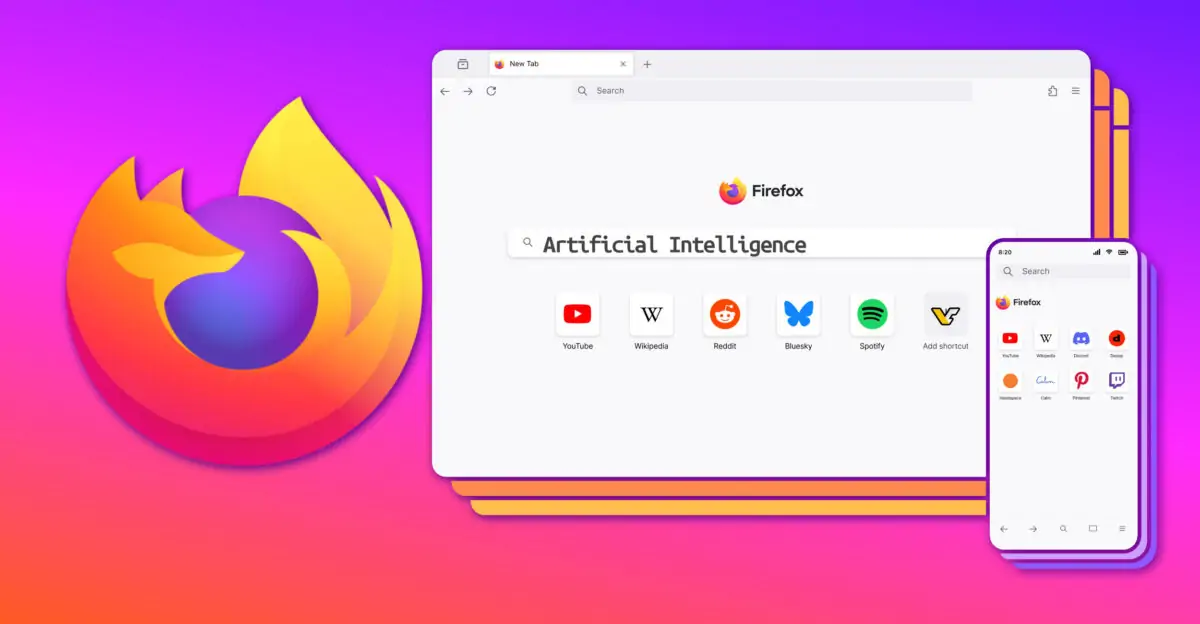
The implementation philosophy is refreshingly straightforward: opt-in by default, multi-model support, and the ability to kill it completely if you’re not feeling it. Enzor-DeMeo emphasized that AI features must remain optional, stating that controls need to be simple and transparent. Firefox users will be able to select from various AI models, including open-source options, Mozilla-hosted cloud choices, and integrations from major AI companies like ChatGPT and Gemini.
What makes this approach technically interesting is Mozilla’s commitment to on-device processing wherever possible. Features like automatic alt-text generation, translation capabilities, and smart tab grouping run locally on your machine, keeping sensitive data away from external servers. Recent performance optimizations have made these on-device features up to 10 times faster, with PDF alt-text generation dropping from 3.5 seconds to just 350 milliseconds.
Why this matters for the browser wars
Mozilla’s pivot addresses a fundamental shift in how we interact with the web. Competitors like Perplexity, Arc, and OpenAI’s recently launched Atlas browser are reimagining browsers as AI-first platforms. Mozilla can’t afford to ignore this trend, but they’re also acutely aware that their user base chose Firefox specifically for privacy and control.
The company’s struggling to balance innovation with trust. Firefox has shown double-digit mobile growth for two consecutive years, but desktop share remains stagnant. Enzor-DeMeo’s strategy focuses on building what he calls “the world’s most trusted software company”, leveraging Mozilla’s reputation for privacy while diversifying revenue streams beyond Google’s search deal, which still accounts for roughly 85% of Mozilla’s income.
Technical implementation details suggest Mozilla’s taking a pragmatic approach. Rather than building proprietary LLMs from scratch, they’re aggregating existing models and letting users switch between providers. This reduces infrastructure costs while positioning Firefox as a neutral platform rather than another AI company trying to lock you into their ecosystem.
The community backlash problem
Here’s where things get messy. Despite Mozilla’s assurances about optional AI features, the community response has been overwhelmingly negative. Social media lit up with criticism, with one viral post noting “I’ve never seen a company so astoundingly out of touch with the people who want to use its software.” Many Firefox users explicitly chose the browser to escape AI bloat in Chrome and Edge, now they’re watching their refuge embrace the very thing they were running from.
Competitors are already capitalizing on this discontent. Waterfox released a “No AI Here” manifesto, while Vivaldi doubled down on keeping browsing “human.” These Firefox forks are positioning themselves as the true privacy sanctuaries for users who want absolutely zero AI in their workflow.
Mozilla’s betting that transparency and user control will differentiate them from the competition. Whether that’s enough to convince skeptical users remains an open question. The company’s walking a tightrope between staying relevant in an AI-dominated market and maintaining the trust of a community that values Firefox precisely because it hasn’t gone all-in on every tech trend.
The next three years will determine if Mozilla’s bet pays off or if they’ve just handed users another reason to jump ship.
Want to stay updated on the latest tech moves and browser wars? Follow Geek Realm Hub on Facebook for more breaking news, deep dives, and honest takes on everything happening in the tech world.