



The news hit quietly, the way these things sometimes do. Kazuki Motoyama, the Japanese illustrator and writer who spent decades bringing Nintendo’s most iconic plumber to life on manga pages, has passed away at 69. His sister, Lisa Motoyama, shared the heartbreaking announcement on social media, keeping the details private but expressing gratitude to everyone who supported her brother’s work throughout his remarkable career.
For those who grew up reading his wild, irreverent takes on the Mushroom Kingdom, Motoyama wasn’t just another manga artist, he was the guy who proved that Mario’s adventures could be just as entertaining in black and white panels as they were on a TV screen.
From Kawasaki to the Mushroom Kingdom
Born on April 12, 1956, in Kawasaki, Kanagawa Prefecture, Motoyama showed an early knack for illustration and storytelling. He cut his teeth as an assistant before making his debut in 1977 with Love & Mini, a work that earned him solid recognition right out of the gate. From there, he explored various genres, dabbling in both shōnen and shōjo manga, honing a style that would eventually become unmistakably his own.
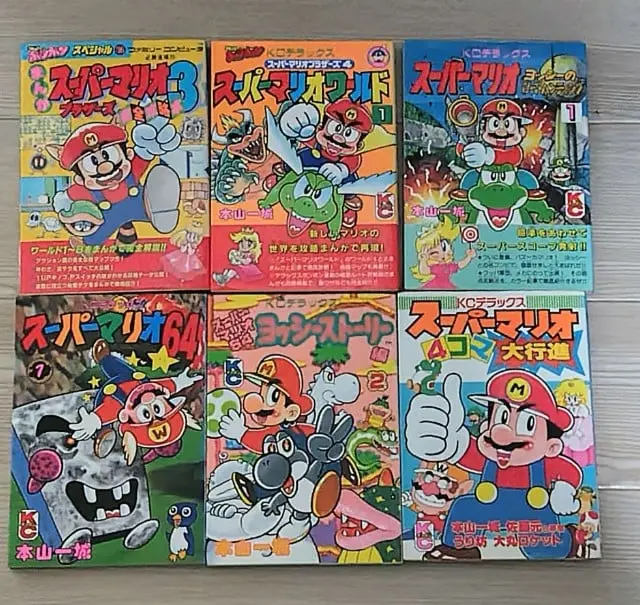
But it was his partnership with Nintendo, through publisher Kodansha, that would cement his place in pop culture history. When he took on the challenge of adapting Super Mario Bros. to manga format, Motoyama didn’t just retell the games’ stories. He reimagined them entirely, infusing the adventures of Mario, Luigi, Princess Peach, and Bowser with a comedic energy that felt fresh and unpredictable. His versions of Super Mario Bros. 3 and Super Mario 64 weren’t straightforward adaptations, they were love letters wrapped in absurdity.
Breaking the fourth wall, one panel at a time
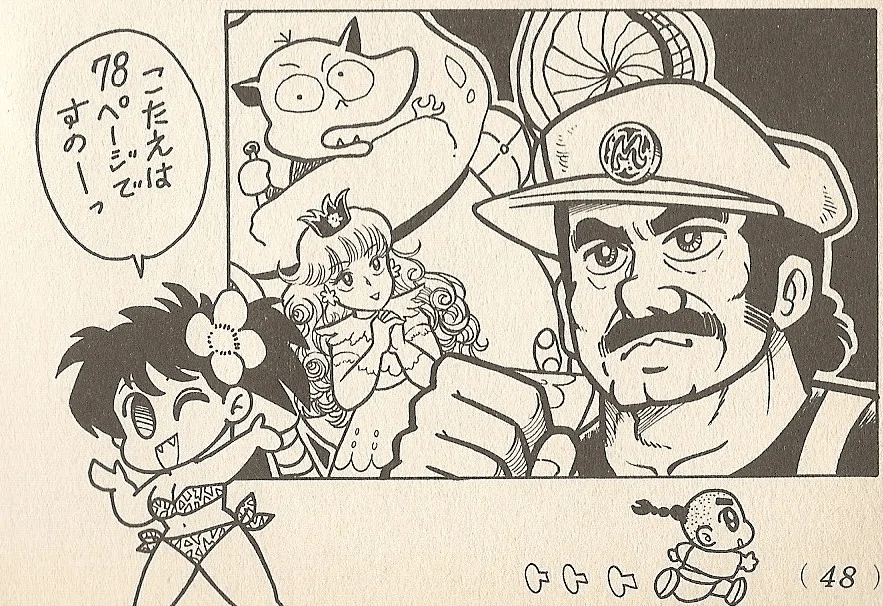
What set Motoyama apart from other video game adaptations was his fearless approach to comedy. His Mario manga embraced the chaotic, self-aware humor that defined Japanese comics in the ’80s and ’90s. Characters didn’t just go on adventures, they got into ridiculous predicaments, cracked jokes about being in a manga, and occasionally acknowledged that none of this made any sense. It was meta before meta was cool.
And then there was “Mototin”, Motoyama’s cartoon alter ego, who would literally draw himself into his own stories to interact with Mario and the gang. Imagine reading a Mario comic where the artist suddenly shows up to argue with Bowser or give Luigi advice. It was bizarre, brilliant, and completely endearing.
Over the course of his run, Motoyama produced an astounding 183 chapters across 43 collected volumes. He even created original characters to expand the Mushroom Kingdom’s universe, adding his own flavor to Nintendo’s carefully crafted world. The series only came to an end when Kodansha lost the licensing rights, a bittersweet conclusion to what had become a beloved institution for Japanese readers.
Beyond Mario, Motoyama worked on other series like Kinoppe-chan Forever, further establishing his reputation as a mangaka with impeccable comedic timing, a distinctive art style, and a gift for making familiar stories feel brand new.
Kazuki Motoyama, artista de mangá responsável por escrever e ilustrar o mangá “Super Mario” (KC Mario), faleceu.
A notícia foi divulgada por sua irmã, Risa Motoyama, no dia 2 de outubro de 2025, anunciando oficialmente o falecimento. pic.twitter.com/7LzWsRirkh
— Portal Super Mario (@PortalSMario) November 10, 2025
A legacy drawn in ink
Lisa Motoyama’s message to fans was brief but deeply felt: “My brother has passed away. To all the people who supported him during his life, thank you very much. I’m sorry to have caused you worry. When I feel a bit calmer, I will resume my YouTube channel. I would be very happy if you could wait until then.”
The response from the gaming and manga communities has been overwhelming. Social media filled with panels from his work, fans sharing their favorite moments, and tributes celebrating the joy he brought to millions. For many, Motoyama’s Mario manga was their first introduction to the character outside of video games, a gateway that showed them how versatile and fun these stories could be in different mediums.
Kazuki Motoyama leaves behind a body of work that’s equal parts nostalgic and timeless. He took one of the most recognizable characters in entertainment history and made him his own, proving that great art isn’t about perfect adaptation, it’s about bringing your unique voice to something people already love. And in doing so, he created something that will continue to make readers smile for generations to come.
Rest in peace, Motoyama-sensei. The Mushroom Kingdom won’t be quite the same without you.