



According to a major leak from reliable insider Jaykihn published on April 24, Intel has cancelled its discrete gaming GPUs for the upcoming Xe3P Arc “Celestial” architecture, and the decision was reportedly made a long time ago.
Celestial was canned long ago.
Druid is up in the air.
— Jaykihn (@jaykihn0) April 24, 2026
The leak, which was picked up by Tom’s Hardware, VideoCardz, WCCFTech, and other major tech outlets, confirms that there are no gaming-focused discrete graphics cards planned under the Celestial family. Intel has not officially confirmed or denied the cancellation.
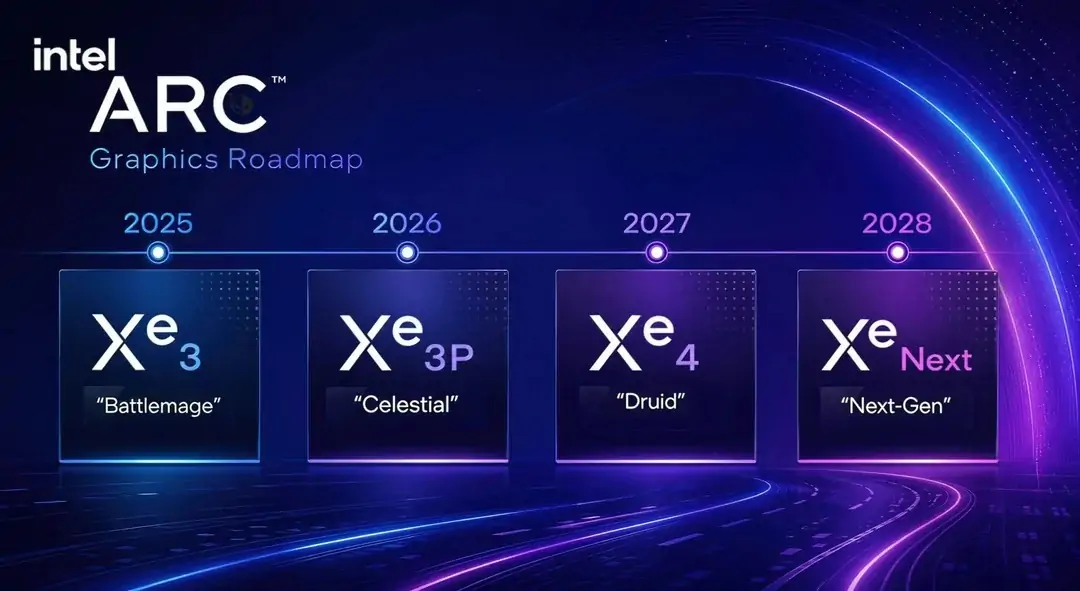
Intel’s original Arc GPU roadmap covered four architectures in sequence: Alchemist, Battlemage, Celestial, and Druid. Celestial, based on the Xe3P architecture, was expected to be the natural successor to the Arc B-series Battlemage cards.
With the cancellation now reportedly confirmed, the Arc B580 and B570, launched in December 2024, will remain Intel’s last discrete gaming GPUs for the foreseeable future, at least until the next-gen Xe4 “Druid” architecture potentially arrives in late 2027, and even that is described by Jaykihn as “up in the air.”
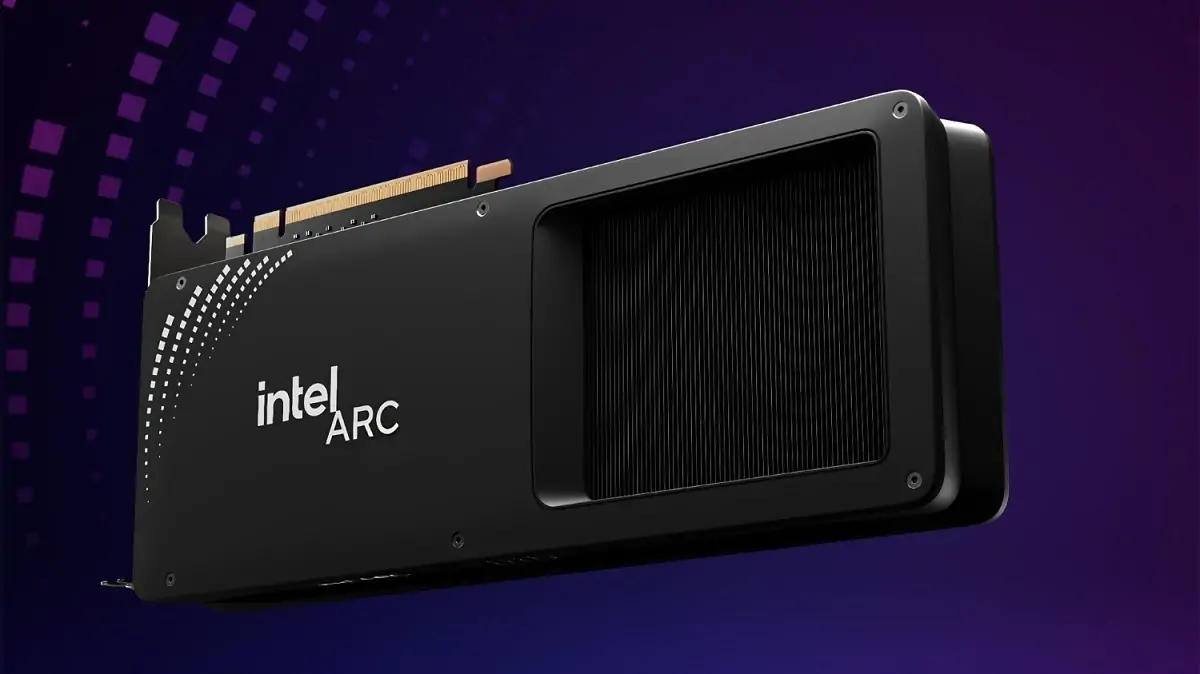
The Arc B580 launched on December 13, 2024, at a starting price of $249, and was widely praised for its price-to-performance ratio. Demand surged immediately after launch, with the card selling out at major retailers and Intel having to publicly address a supply shortage.
By late 2025, Intel had crossed the 1% threshold in the discrete GPU market for the first time, according to data from Jon Peddie Research, a small but meaningful milestone for a company that had hovered around half a percent since the Arc Alchemist generation.
Xe3P is not dead, just not for Gamers
The Xe3P architecture behind Celestial has not been scrapped entirely, it is simply being redirected away from consumer gaming cards. Intel has already confirmed Crescent Island, a data center GPU based on Xe3P, featuring 160 GB of LPDDR5X VRAM, with customer sampling expected in the second half of 2026.
Additionally, Xe3P is being used across the Nova Lake platform for display and media engine blocks, and a special NVL-S desktop CPU variant featuring 12 Xe3P integrated graphics cores is also reportedly in development.
Jaykihn also confirmed that Arc Pro-series workstation GPUs based on Xe3P are potentially in the works via the Crescent Island Workstation platform. So while Xe3P is very much alive as an architecture, its deployment is focused entirely on the datacenter, workstation, and integrated graphics segments, not on the discrete gaming cards that the community was waiting for.
This shift reflects a broader strategic pivot at Intel. With the AI boom driving massive demand for datacenter hardware, it appears Intel made the decision to redirect Celestial resources toward higher-margin enterprise products rather than continuing to compete in the fiercely contested consumer gaming GPU market, where the company holds only a fraction of market share against NVIDIA and AMD.
The future of Intel Arc Gaming GPUs Is uncertain
With Celestial out of the picture, all eyes turn to Druid, Intel’s Xe4 architecture. According to Jaykihn’s leak, Xe4 is expected to arrive in late 2027 under the Jaguar Shores platform, primarily targeting AI and datacenter workloads. Whether a gaming-focused discrete GPU will be part of the Druid lineup remains undecided, with the leaker explicitly stating that a gaming GPU for Druid is “up in the air.”
If Intel skips discrete gaming GPUs for both Celestial and Druid, the company would effectively go several years without releasing a new gaming card, a gap that would be very difficult to recover from in terms of driver ecosystem maturity, game developer support, and consumer trust.
The Arc B580 made a genuine case for Intel as a third option in the gaming GPU market, particularly in the budget-to-mid-range segment. Losing that momentum without a follow-up would put Intel back at square one.
It is worth noting that Jaykihn has acknowledged that his knowledge only spans roughly a year or two of Intel’s roadmap, and Intel’s plans have historically shifted multiple times. The Xe3 architecture itself was originally supposed to be Celestial with a planned 2025 launch, before Intel restructured its naming and pushed Xe3P into that role instead.
Intel’s roadmaps have not been the most consistent, so while the current leaks point clearly to no gaming GPU for Celestial, things could still change for Druid.
For now, anyone waiting on a new Intel Arc gaming GPU will have to stick with the B580 or B570. Intel continues to release regular driver updates for Battlemage, which is at least a signal that the company has not completely walked away from its gaming GPU user base.
But without a new discrete gaming card on the horizon until at least late 2027, and even that is not confirmed, the window for Intel to maintain relevance in the gaming GPU market is getting narrower.
The NVIDIA and AMD duopoly in discrete gaming GPUs remains firmly intact for the foreseeable future, and Intel’s best hope of breaking into that space now rests entirely on what Druid turns out to be.
What do you think, is Intel making a smart call by focusing on AI and datacenter, or are they throwing away everything Battlemage built? Let us know in the comments!