



Guillermo del Toro has never been one to shy away from ambitious practical effects, but his latest film Frankenstein (2025) pushes the boundaries of what’s possible when old-school craftsmanship meets cutting-edge technology. Behind those hauntingly beautiful gothic sets lies a secret weapon: 3D printing.
Netflix’s documentary Frankenstein: The Anatomy Lesson pulls back the curtain on the production, revealing how del Toro’s team used modern fabrication techniques to bring Mary Shelley’s classic tale to life in ways that would’ve been nearly impossible just a decade ago.
When miniatures aren’t so mini
The word “miniature” doesn’t quite do justice to what the Frankenstein crew built. While the laboratory interior was constructed at full scale, complete enough to accommodate Jacob Elordi’s marathon 11-hour makeup sessions as the Creature, the exterior shots required something different.
Enter the “maxiture,” a term that perfectly describes the 30-foot gothic tower built at 1:40 scale. Model maker Ben Ressa and his team faced a classic challenge: how do you replicate the intricate details of a full-sized set on a smaller scale without spending months hand-sculpting every ornamental element?
The answer was 3D printing. By digitally scanning the life-size set, the team could reproduce exact architectural details, carved arches, relief sculptures, and ornate stonework, with perfect accuracy. “There’s some details we have that traditionally we’d have to hand-sculpt to do the match,” Ressa explains. “But now we can use 3D printers to help us.”
The result? A miniature that maintains every bit of visual complexity while dramatically reducing production time.
Del Toro’s love affair with 3D tech
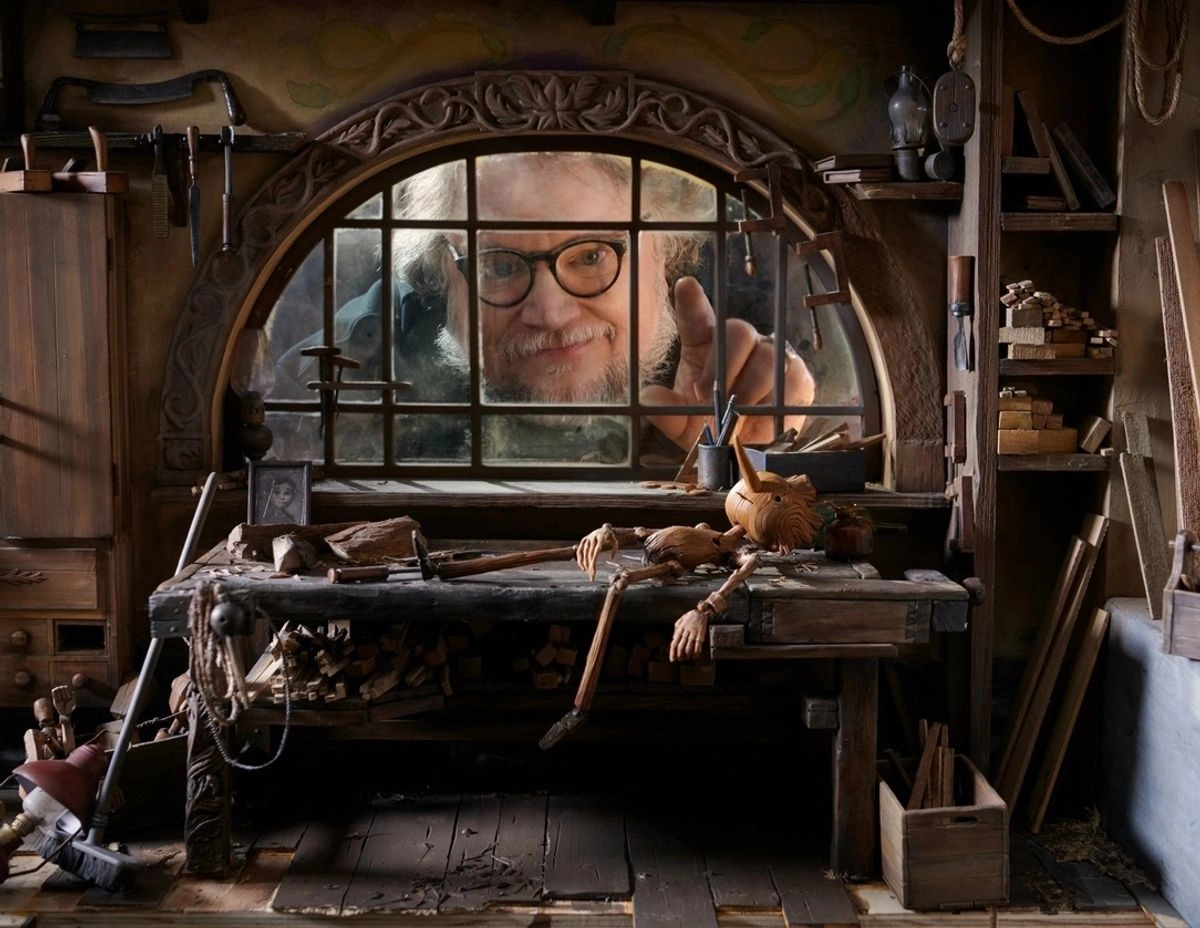
This isn’t del Toro’s first dance with 3D printing technology. His 2023 stop-motion film Pinocchio showcased an even more intimate application of the tech. Instead of traditional clay models, the characters featured mechanical heads and silicone skin, with 3D-printed components forming the skeleton of their performances.
Lead fabricators Georgina Hayns and Richard Pickersgill printed everything from Pinocchio’s torso to replacement heads for different expressions, preserving fine details like the character’s vertical wood grain. The technology didn’t just speed things up, it gave animators unprecedented control over character performances, allowing the puppets to truly act rather than simply move.
A growing trend in filmmaking
Del Toro isn’t alone in embracing this technology. Animation studio LAIKA pushed 3D printing to its limits for Missing Link (2019), producing over 100,000 color-printed faces using a Stratasys J750 system. It’s a glimpse into how modern filmmaking is evolving, not abandoning practical effects, but supercharging them.
What makes del Toro’s approach special is how seamlessly he blends the old and new. The 3D-printed tower in Frankenstein doesn’t look digital or artificial. It looks handcrafted, weathered, and real, because it is, just made with tools that would seem like magic to the miniature builders of decades past.
As filmmaking technology continues to advance, directors like del Toro prove that innovation doesn’t mean sacrificing artistry. Sometimes, it means bringing your wildest gothic visions to life at 30 feet tall.
Want more deep dives into the tech and craft behind your favorite films? Follow Geek Realm Hub for stories that celebrate where creativity meets innovation.