



An IT worker was tasked with destroying some company SSDs before they were passed along, so he grabbed a drill and did what seemed logical. Spoiler: it didn’t work at all.
The story came from Reddit, posted by user Stretcheddd, who ended up receiving one of those old company computers. When he opened it up, he found the SSD inside had a perfectly drilled hole through it, and was working flawlessly. The drive wasn’t destroyed. It wasn’t even damaged. It basically just had a new ventilation hole.
Why a drill isn’t enough to kill an SSD
Here’s where it gets interesting. With traditional hard drives (HDDs), drilling can do real damage because the entire interior is packed with spinning magnetic platters. Hit those, and you’re done, the data’s gone. But SSDs are a completely different animal.
Modern SSDs use small PCBs that don’t necessarily fill out the entire drive shell. That means drilling a hole through the center of the casing can completely miss the actual electronics inside. The NAND flash memory chips and the controller, the parts that actually hold your data, can sit untouched behind the plastic while your drill happily pokes through empty space.
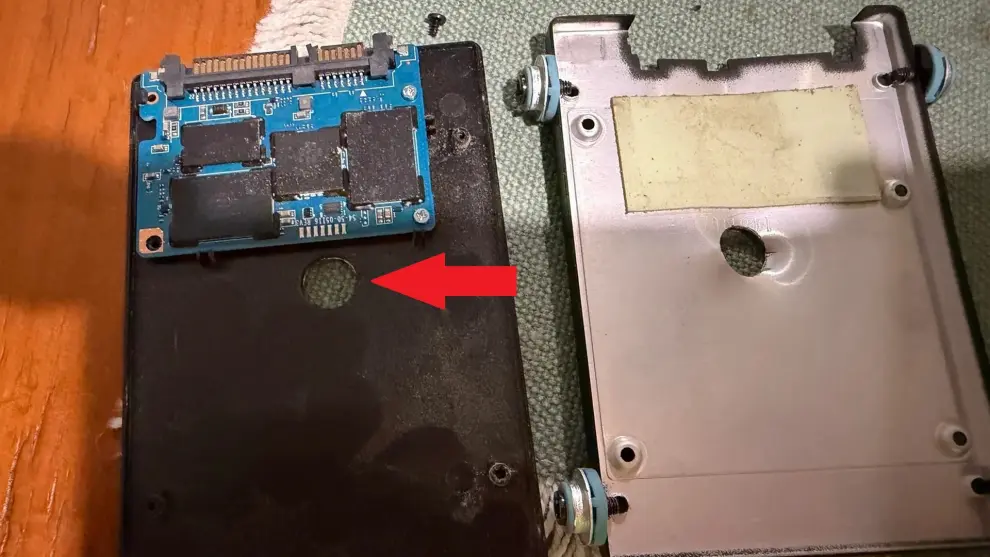
There’s a documented case of a large corporation that sent “already destroyed” SSDs to a data destruction firm. When examined, the drill hadn’t even touched the internal circuit board, all the damage was cosmetic. The drives were plugged in and confidential company data was fully accessible. That’s a security nightmare.
So, how do you actually destroy an SSD?
If you need to physically destroy an SSD, the approach has to be much more targeted. Drilling holes into the chips can still leave data intact, experts recommend thoroughly destroying the drive with a hammer so all memory chips are pulverized, or using professional shredding services for particularly sensitive data.
If you’re going to drill, at least make multiple perforations or open the drive to ensure you hit the chips directly. Some companies even use industrial tools designed specifically for this, machines that shred hundreds of SSDs per hour, leaving absolutely nothing recoverable.
For those handling sensitive corporate data, there are also software-based options worth considering before reaching for the power tools. Enabling full-disk encryption and then wiping the key is one of the more elegant solutions, without the right key, the data is mathematically unreadable, drill or no drill.
The bottom line? SSDs are tough little devices, and they don’t go down without a fight. That IT worker probably thought he was doing his job, and technically he did drill the drive. He just didn’t destroy anything that mattered.
Have you ever had to destroy old storage drives at work? What method did you use, and did it actually work? Drop your experience in the comments, we’d love to know!