



ASRock finally broke its silence this week after mounting pressure from the PC building community, issuing an official statement acknowledging reports of AMD Ryzen 9000 series processors failing on its AM5 motherboards.
The company says it’s “closely monitoring” the situation and working with AMD to investigate what’s been a growing nightmare for enthusiasts who’ve watched their brand-new CPUs die without warning.
The problem surfaced early this year when Reddit users started documenting bizarre failures: systems that powered on but never reached POST, debug LEDs stuck on red, and in some cases, processors with visibly burnt contact pads and that unmistakable smell of fried silicon.
What made this particularly alarming was the pattern, nearly all reported failures happened on ASRock boards, spanning models like the B850, X870, and X870E chipsets.
Five separate CPU deaths were documented in a single day alone, affecting everything from the budget Ryzen 5 9600X to the flagship Ryzen 9 9950X3D.
The real culprit: Overly aggressive PBO settings
According to YouTuber Tech Yes City, who spoke directly with ASRock at Computex, the company quietly admitted the root cause: their Precision Boost Overdrive settings were configured way too aggressively for early Ryzen 9000 samples.
Specifically, ASRock’s mid-range and high-end boards had their Electric Design Current and Thermal Design Current limits cranked higher than competing motherboards from ASUS, MSI, and Gigabyte.
While these settings fell within AMD’s official specifications, they apparently pushed early CPU batches beyond what the silicon could safely handle, resulting in permanent electrical damage.
The failures weren’t limited to overclockers pushing limit, many users reported stock configurations killing their CPUs, sometimes after months of stable operation.
Some boards were allegedly defaulting to dangerous voltages exceeding 1.4V at idle, bypassing the processor’s internal protections and causing catastrophic silicon degradation during boot sequences.
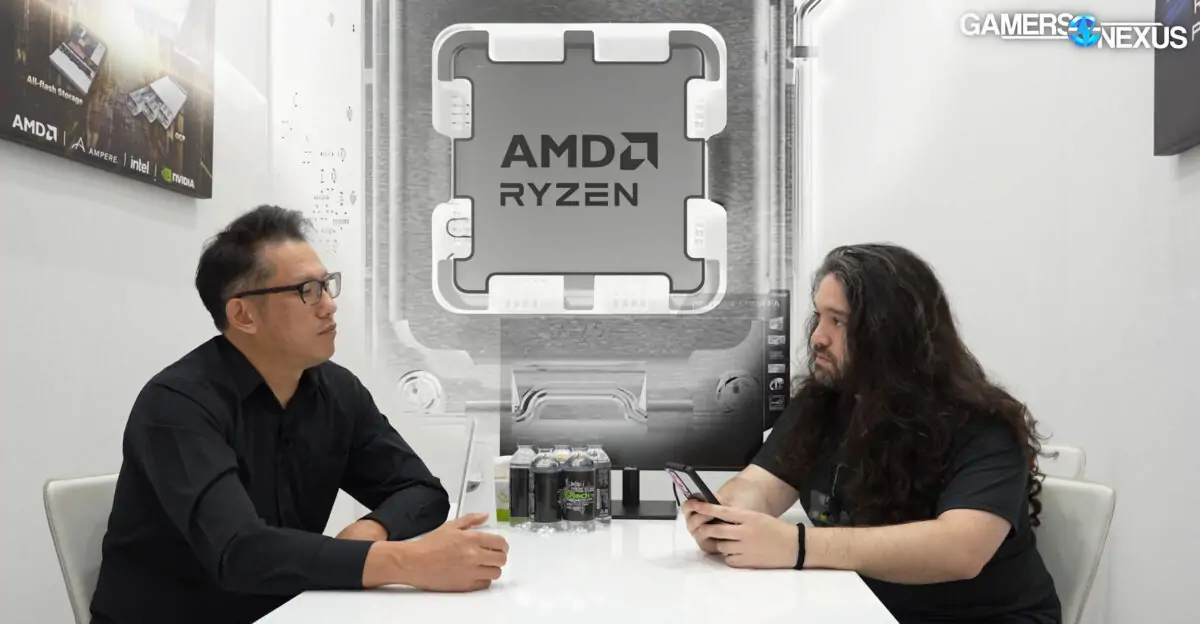
Hardware testing channel Gamers Nexus even attempted to intentionally reproduce the failure on a board known to have killed a processor before, but couldn’t replicate it, highlighting just how unpredictable this issue has been.
Where things stand now
ASRock stated it has “implemented comprehensive internal reviews and rigorous verification processes” and is working “in seamless coordination with AMD” to validate system performance and optimize BIOS settings.
However, the statement stops short of explicitly acknowledging the CPU deaths or providing specific guidance on liability for damaged processors.
The company has released multiple BIOS updates adjusting problematic current limits and optimizing what they call “shadow voltages”, settings users can’t even configure themselves.
But the lack of a public advisory urging immediate updates frustrated many in the community who felt ASRock should’ve been more transparent from the start. What remains unclear is whether CPUs that ran extensively on older BIOS versions suffered permanent degradation, similar to Intel’s 13th and 14th Gen voltage issues that required full replacements.
ASRock and AMD are both honoring warranties for confirmed failures, but neither has clarified long-term liability or how users can prove motherboard-induced damage. The failure rate overall remains extremely low according to system integrator Puget Systems, just 2.52% for Ryzen CPUs in general, but for those affected, it’s a $300 to $700 paperweight that shouldn’t have died.
If you’re running a Ryzen 9000 chip on an ASRock AM5 board, update your BIOS now. And if you’re planning a new build, maybe wait for more clarity before pairing that shiny new processor with an ASRock motherboard.
Stay plugged into Geek Realm Hub for the latest on this saga and hit us up on Facebook, we’re tracking every twist in this hardware horror story!